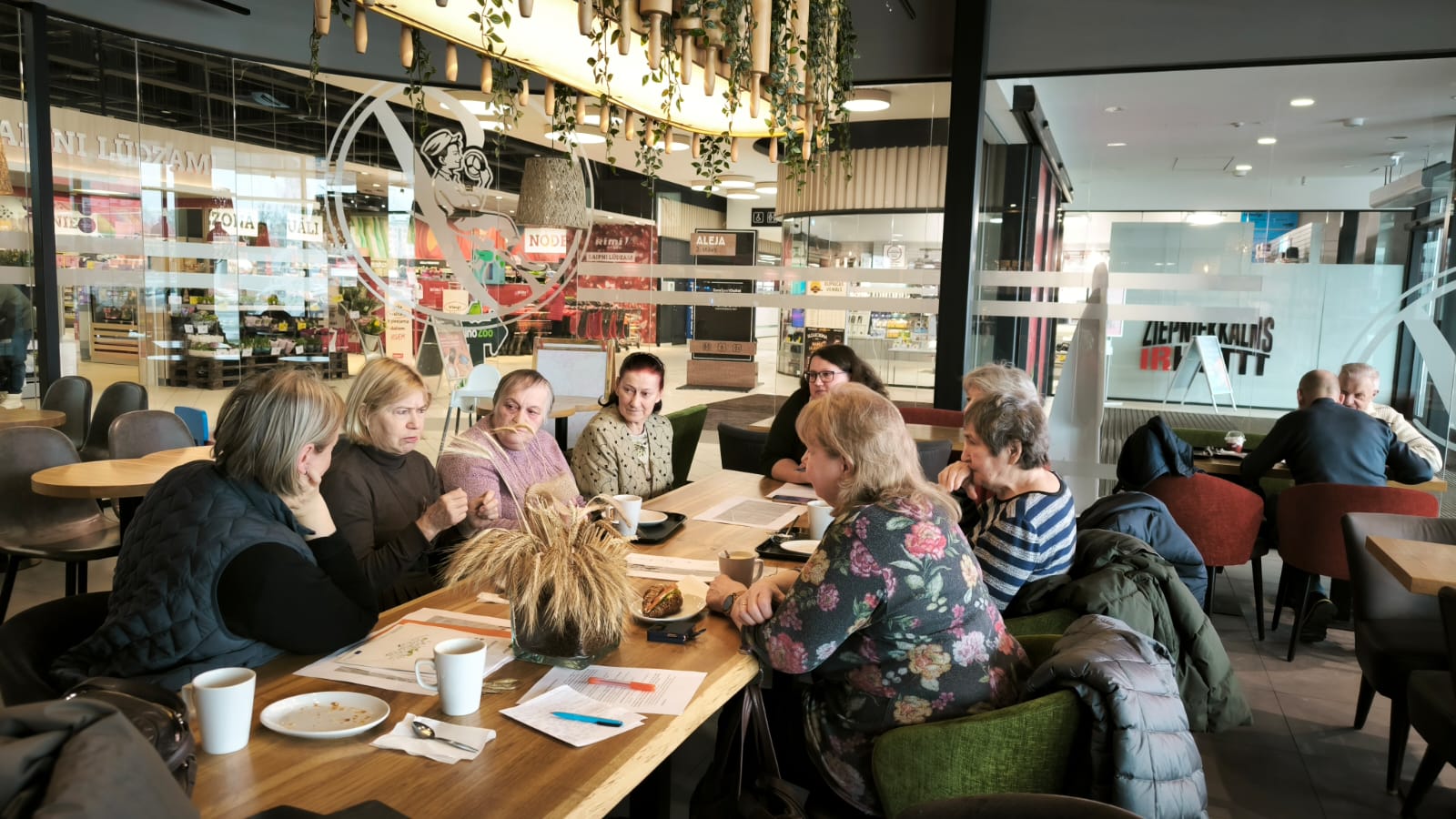
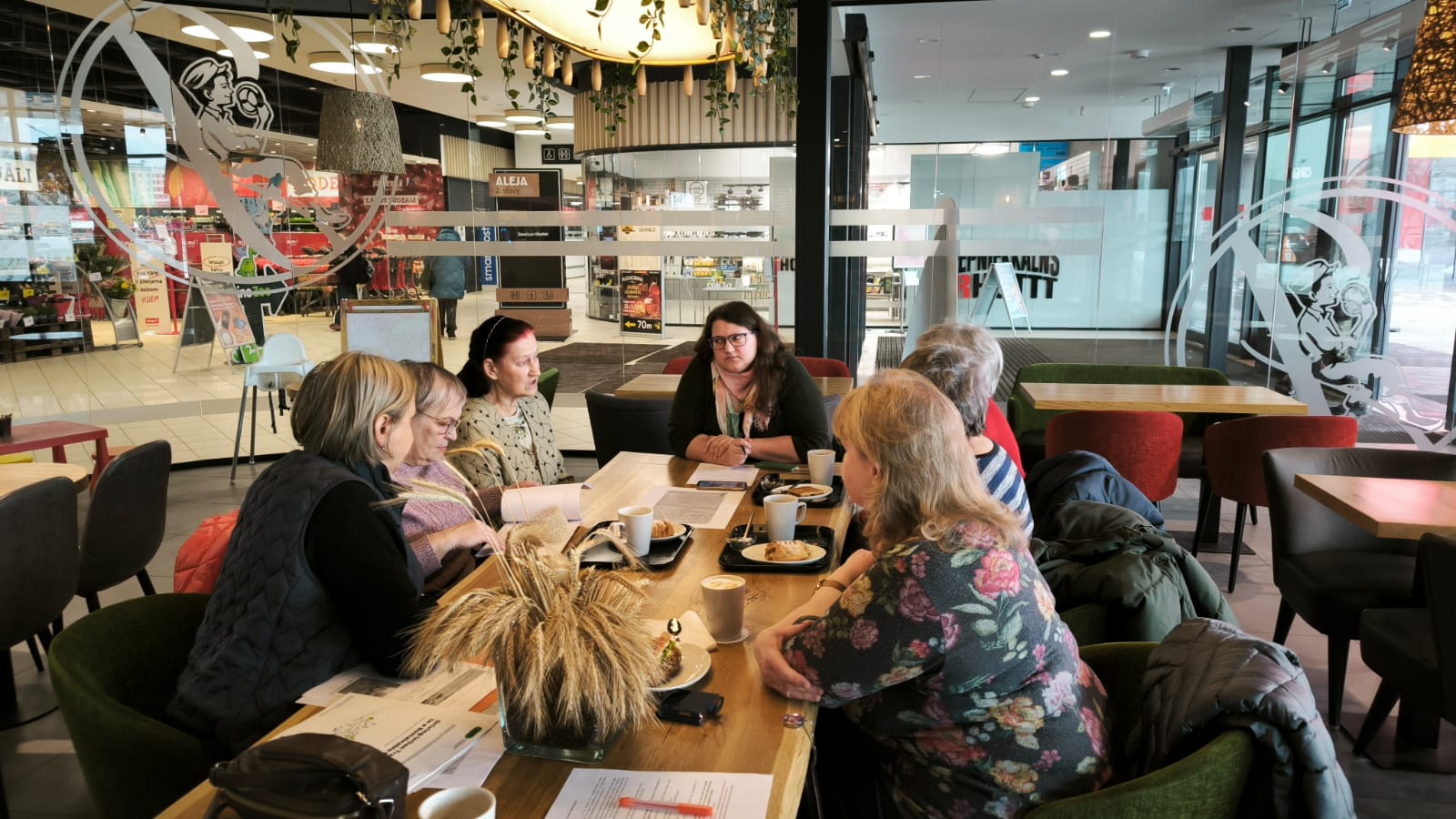
As a part of the ongoing collection of qualitative data on large-scale housing estates, Riga team organized a focus group discussion with senior residents living in Ziepniekkalns.
The focus group highlighted Ziepniekkalns as a neighborhood that remains highly walkable for daily needs, yet presents notable challenges in terms of comfort, accessibility, and quality of the urban environment. Participants emphasized that while most essential services are reachable on foot, mobility beyond the neighborhood depends heavily on public transport, which is often perceived as unreliable and uncomfortable, discouraging its use.
A key insight from the discussion is the importance of environmental quality for everyday well-being. Respondents expressed a strong need for safe, pleasant, and well-maintained spaces for walking without a specific destination, noting the decline of previously valued green areas and the negative impact of traffic and infrastructure changes. At the same time, lack of local social spaces, such as cafes or gathering places, limits opportunities for community interaction and reduces the attractiveness of staying within the neighborhood.
Despite these challenges, the discussions also revealed positive aspects, including a general sense of safety during daytime and appreciation for local events and improved pedestrian infrastructure in certain areas. Overall, the findings underline the need for more inclusive, human-centered urban interventions that enhance public space quality, improve mobility conditions, and strengthen local social life, particularly for aging populations.