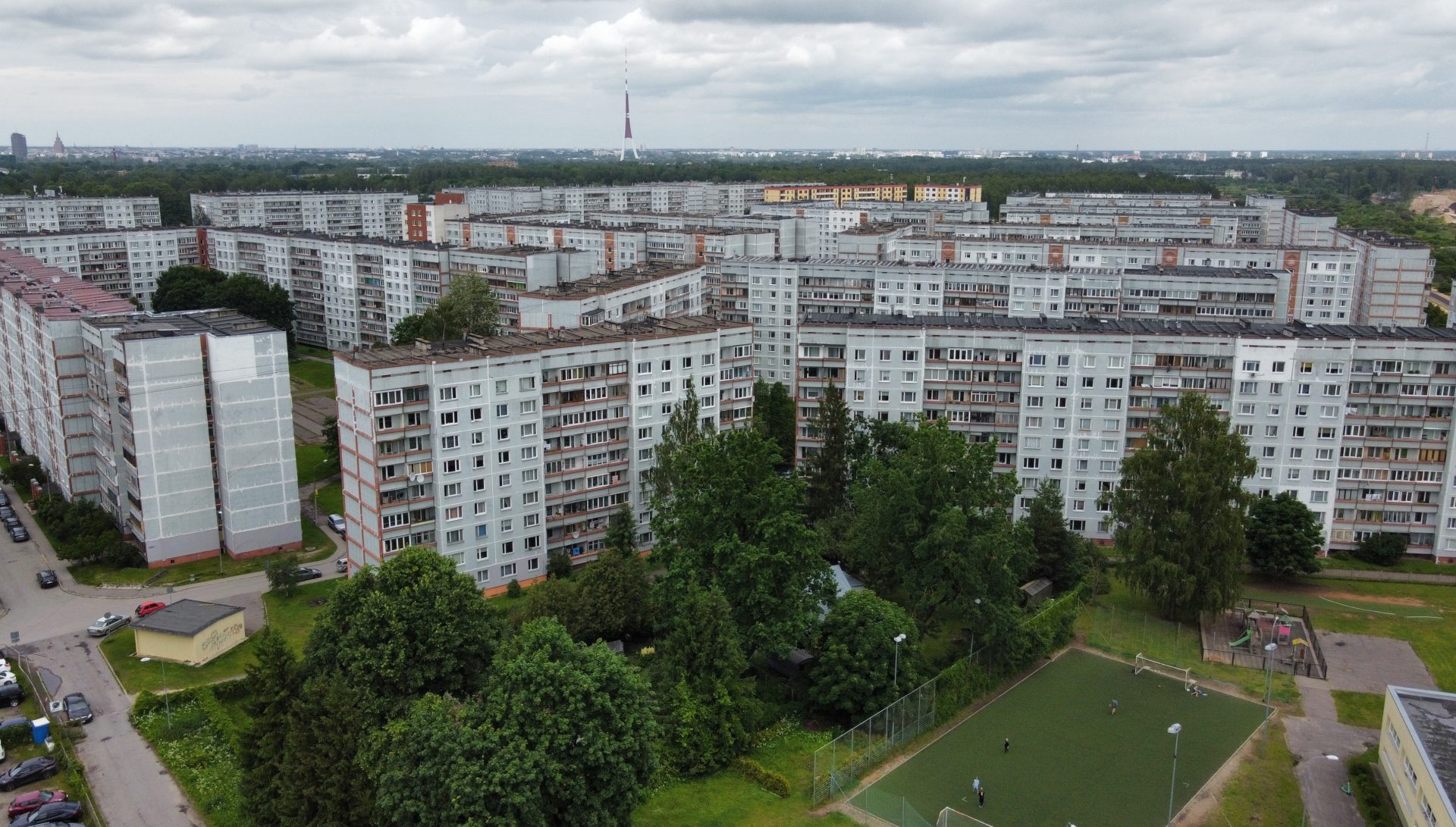
Ziepniekkalns is the southernmost residential district of Riga, Latvia, and one of the city’s last large-scale housing developments from the Soviet era. Planned and constructed primarily during the 1980s, the neighborhood was designed as a modern, self-sufficient residential area. It features high-density housing blocks, green buffer zones, and a regular street layout that reflects the late-socialist planning ideals of functionality and uniformity.
The district is composed mainly of large panel buildings and is home to a diverse population, including a growing number of younger families and elderly residents. Originally equipped with schools, kindergartens, polyclinics, and shops integrated into the housing clusters, Ziepniekkalns was intended to provide all daily needs within walking distance. Over time, however, some of these functions have deteriorated or become obsolete, leading to underused spaces and uneven service provision.
Mobility in Ziepniekkalns is shaped by a wide boulevard and a network of feeder streets that provide access to residential complexes. The area is well-served by Riga’s public transport system—trolleybuses, buses, and minibuses connect the district to the city center and other parts of Riga. Despite this, the built environment still prioritizes cars, with expansive parking zones and long distances between buildings contributing to a fragmented pedestrian experience.
In recent years, attention has turned toward improving the quality of public space and enhancing connectivity for pedestrians and cyclists. Planning strategies increasingly aim to balance the existing car-oriented infrastructure with softer modes of mobility, while integrating green space, public services, and housing renewal.
Ziepniekkalns represents a valuable case for understanding how socialist-era urban districts can transition toward more inclusive and proximity-based models of living and moving. Local stakeholders and residents are gradually becoming more engaged in shaping their environment, laying the groundwork for co-creation processes central to the 15minESTATES approach.
Challenges for Urban Planning:
- Aging housing stock and underutilized infrastructure.
- Diminished access to social and educational amenities in parts of the district.
- Low-quality or disconnected public spaces.
- Mobility patterns still dominated by car use.
- Limited opportunities for active citizen participation in planning.
Within the 15minESTATES project, Ziepniekkalns offers critical insight into the challenges and possibilities of regenerating large housing estates in post-socialist cities through participatory, sustainable mobility and spatial strategies.