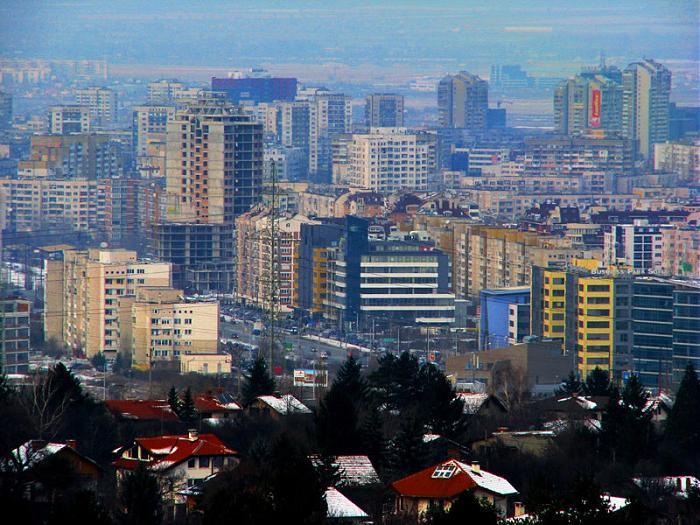
Mladost 4 is the southernmost microdistrict within the broader Mladost residential area of Sofia, Bulgaria. Constructed primarily in the 1980s, Mladost 4 is a product of late-socialist urban development, characterized by high-density residential blocks, a standardized grid layout, and a separation of functions. It is situated near the foothills of Vitosha Mountain and has become one of Sofia’s fastest-growing and most dynamic districts.
The area was originally designed to house workers for nearby industrial zones and included key social infrastructure—schools, kindergartens, healthcare facilities, and green public spaces—integrated into the neighborhood clusters. In recent decades, Mladost 4 has transformed rapidly due to Sofia’s urban expansion and the influx of new residents, businesses, and real estate developments.
One of the district’s defining features is the Business Park Sofia, Bulgaria’s largest office park, which significantly impacts mobility patterns and land use in the area. This juxtaposition of residential and commercial intensification has led to increased congestion and put pressure on existing infrastructure and services.
Mobility in Mladost 4 is supported by several public transport lines, including a metro station that connects the area to central Sofia. However, the area faces a stark contrast between walkable internal zones and busy arterial roads that limit pedestrian comfort and safety. Car use remains dominant, and public space quality varies widely across the district.
Urban planning efforts in recent years have included improvements to transport connectivity and the creation of green corridors, but challenges persist in aligning development with sustainable and inclusive principles. There is a growing need to re-integrate community-oriented spaces and better balance the residential, commercial, and mobility functions of the district.
Challenges for Urban Planning:
- Rapid and uneven urban development driven by real estate pressures.
- Traffic congestion and lack of safe, attractive public space.
- Declining accessibility of basic services for long-term residents.
- Limited community participation in planning processes.
- Tension between private investment and public interest in land use.
As part of the 15minESTATES project, Mladost 4 provides a crucial example of how proximity-based planning and co-creation processes can support more equitable and sustainable development in high-pressure urban growth areas.