News and Articles
Consortium meets in Halle
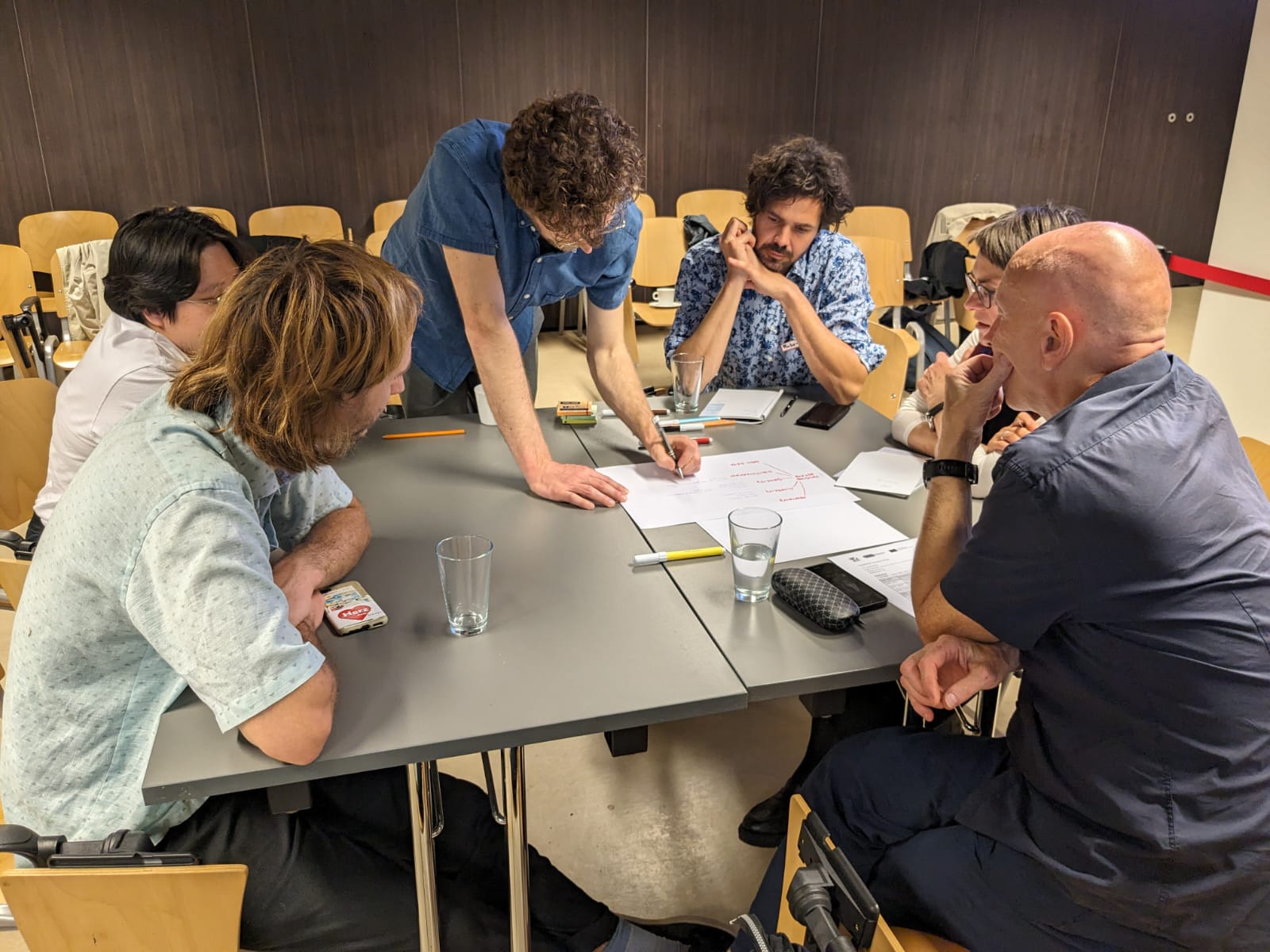
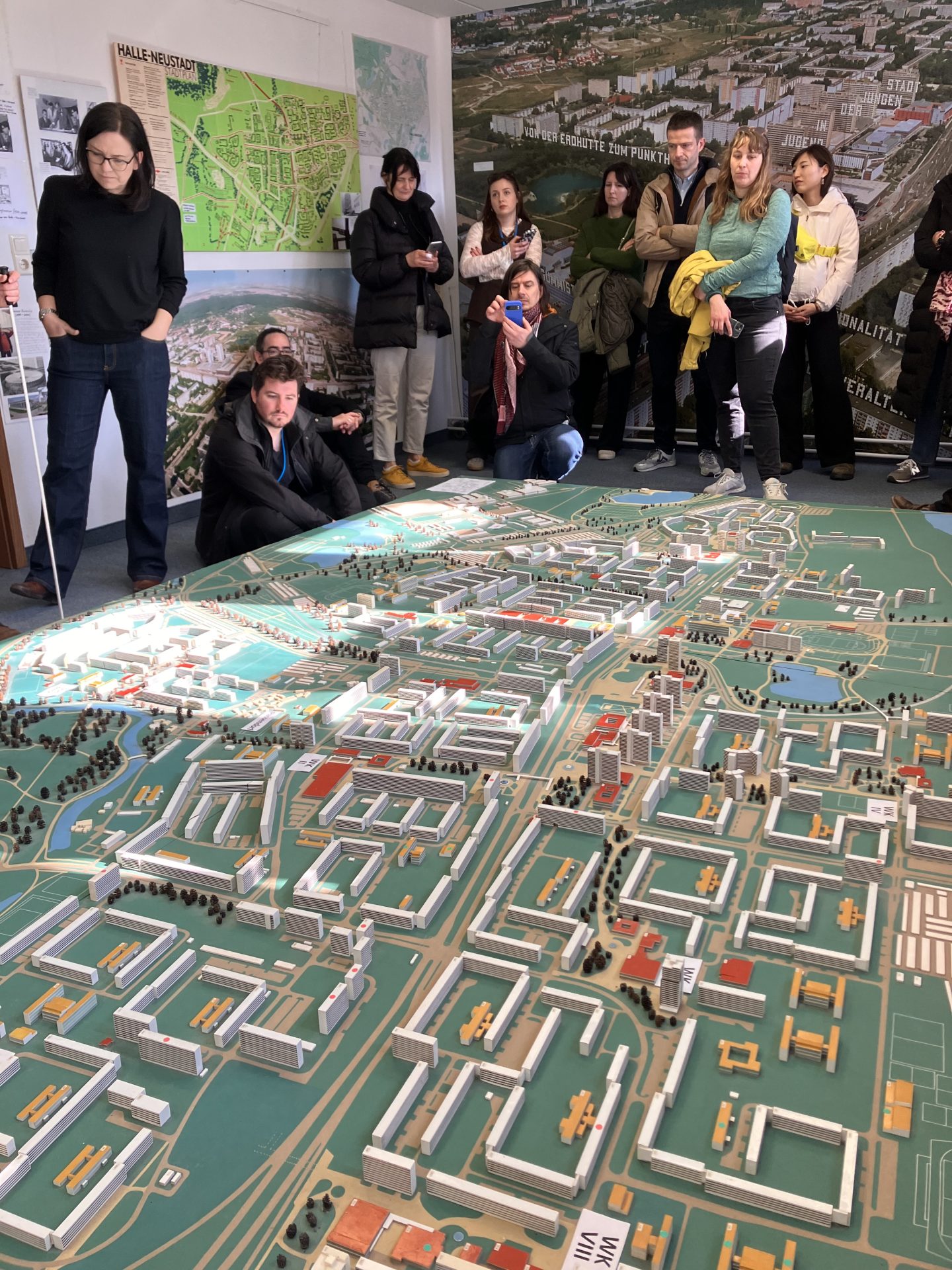
From March 4–6, the 15minESTATES partners met for the third Consortium Meeting. This year, we’re excited to be hosted by the City of Halle and our German partners Leibniz Institute of Ecological Urban and Regional Development (IOER).
As we enter the final year of the project, our main focus is bringing together the insights and conclusions from the data-gathering phase across all case study areas. Over these three days, our international teams will collaborate closely to shape universal pathways for creating 15-minute large housing estates — making neighborhoods more connected, accessible, and livable for everyone.
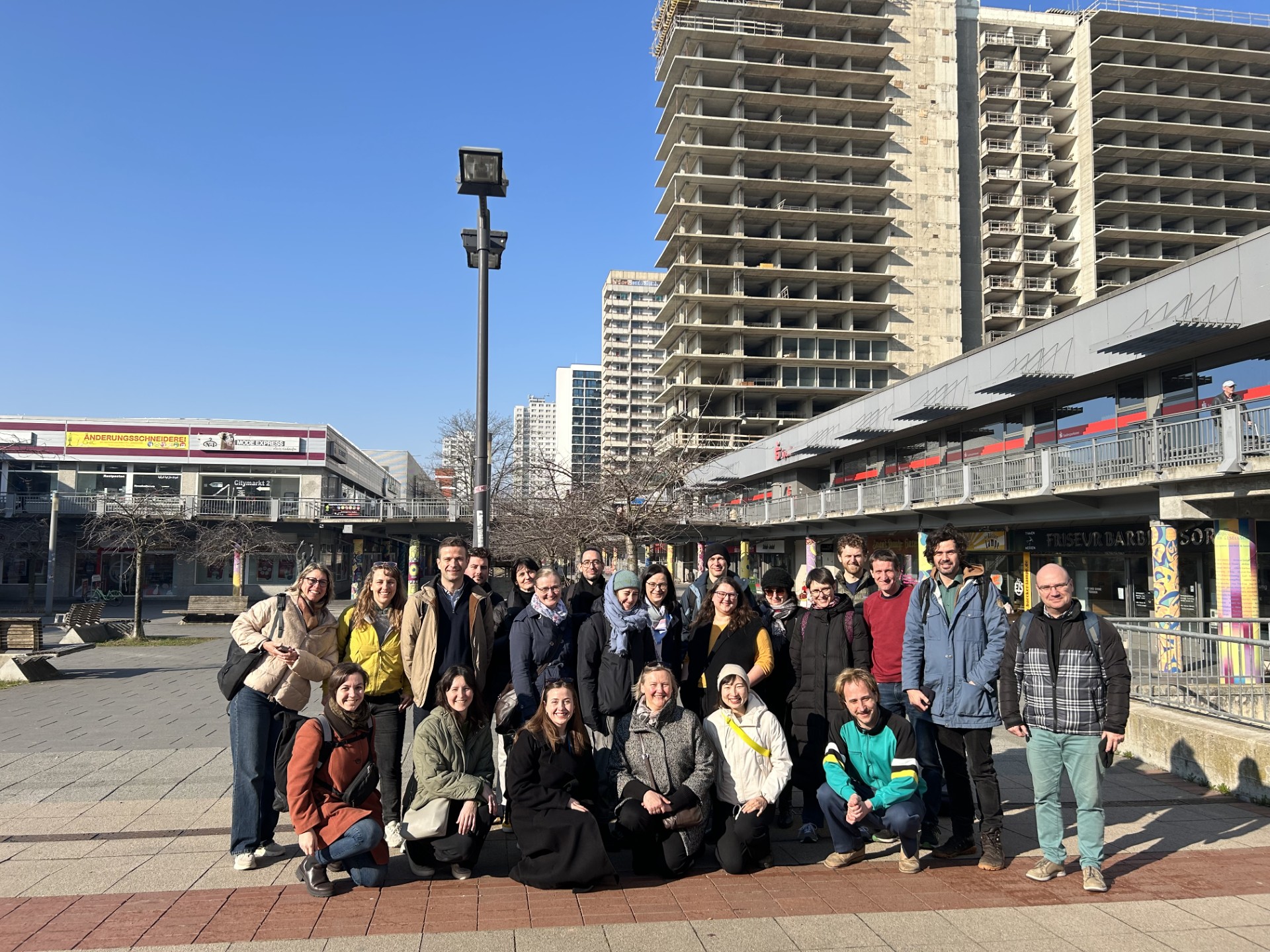
The consortium meeting in Halle focused on the expected results of the project and in-depth discussions on how to effectively transfer the information and knowledge gained during the project to decision-makers, urban planners, and a wider circle of professionals. Particular attention was given to identifying practical communication strategies and tools that would ensure long-term impact beyond the project’s duration. Both the project survey, which was conducted in five European cities – Halle, Delft, Riga, Sofia and Budapest – and many other project activities, such as focus group interviews, go-along interviews, and participatory observations, confirmed the great potential of residential areas to evolve into more sustainable, people-friendly environments.
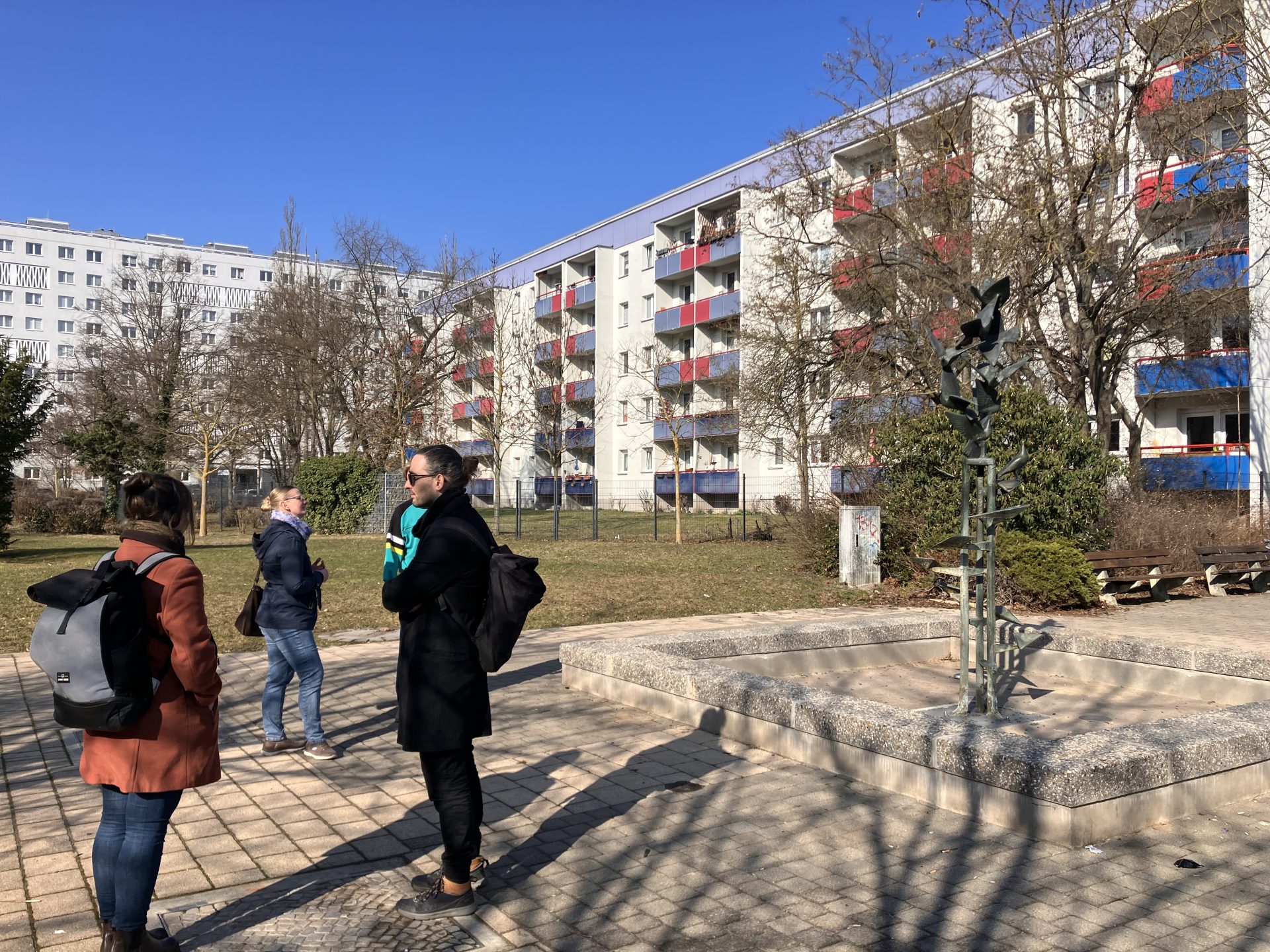
At the same time, the findings highlighted several persistent challenges. Both physical infrastructure constraints and residents’ established habits, alongside social, economic, and planning-related factors, continue to hinder the broader implementation of active mobility principles in large-scale residential areas. These insights provided a valuable basis for discussions among consortium partners about possible interventions and policy recommendations.
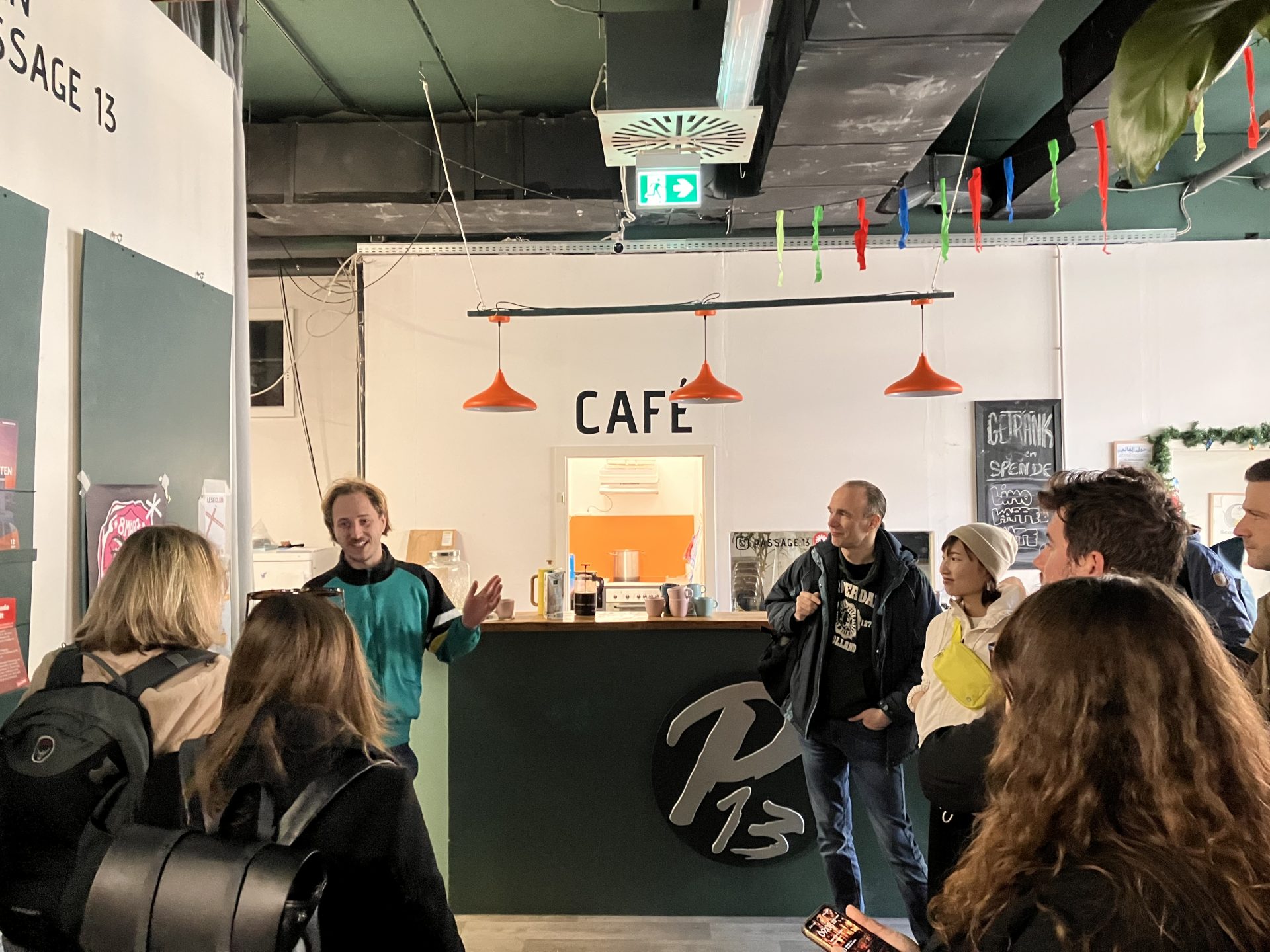
The meeting also addressed the third series of workshops planned across all case study cities, with a focus on delivering research feedback to diverse stakeholder groups, including local authorities, community organizations, and residents. Emphasis was placed on ensuring that this feedback is accessible, actionable, and tailored to the needs of each group. Additionally, getting acquainted with the work and intentions of the New Halle non-governmental organization – particularly its efforts in engaging residents and promoting active mobility approaches – sparked meaningful discussions on the role of various stakeholders. These exchanges underscored the importance of collaboration, co-creation, and shared responsibility in successfully implementing common sustainability goals at the neighborhood level.
Senior residents reflect on living in LHE in Riga
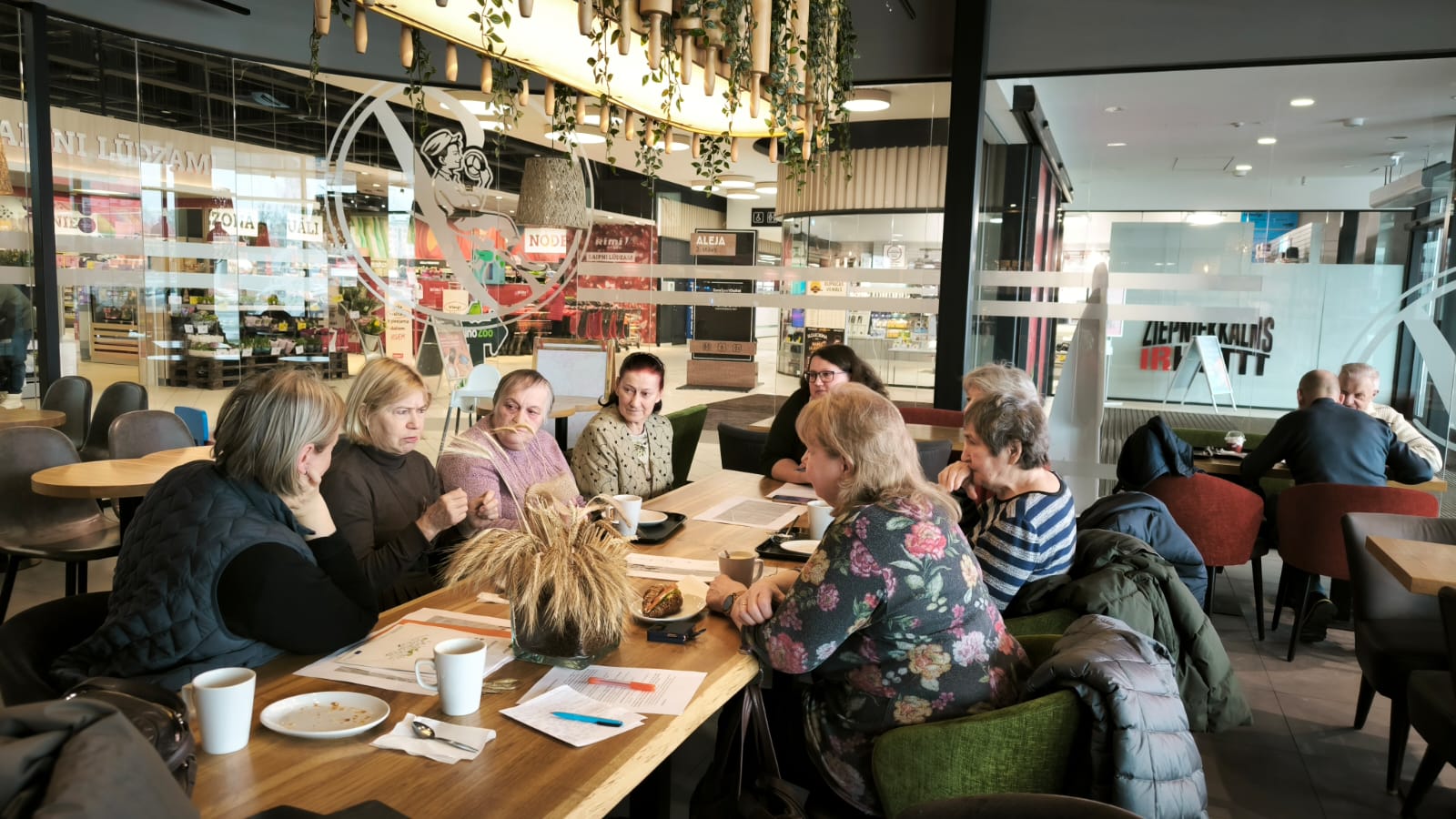
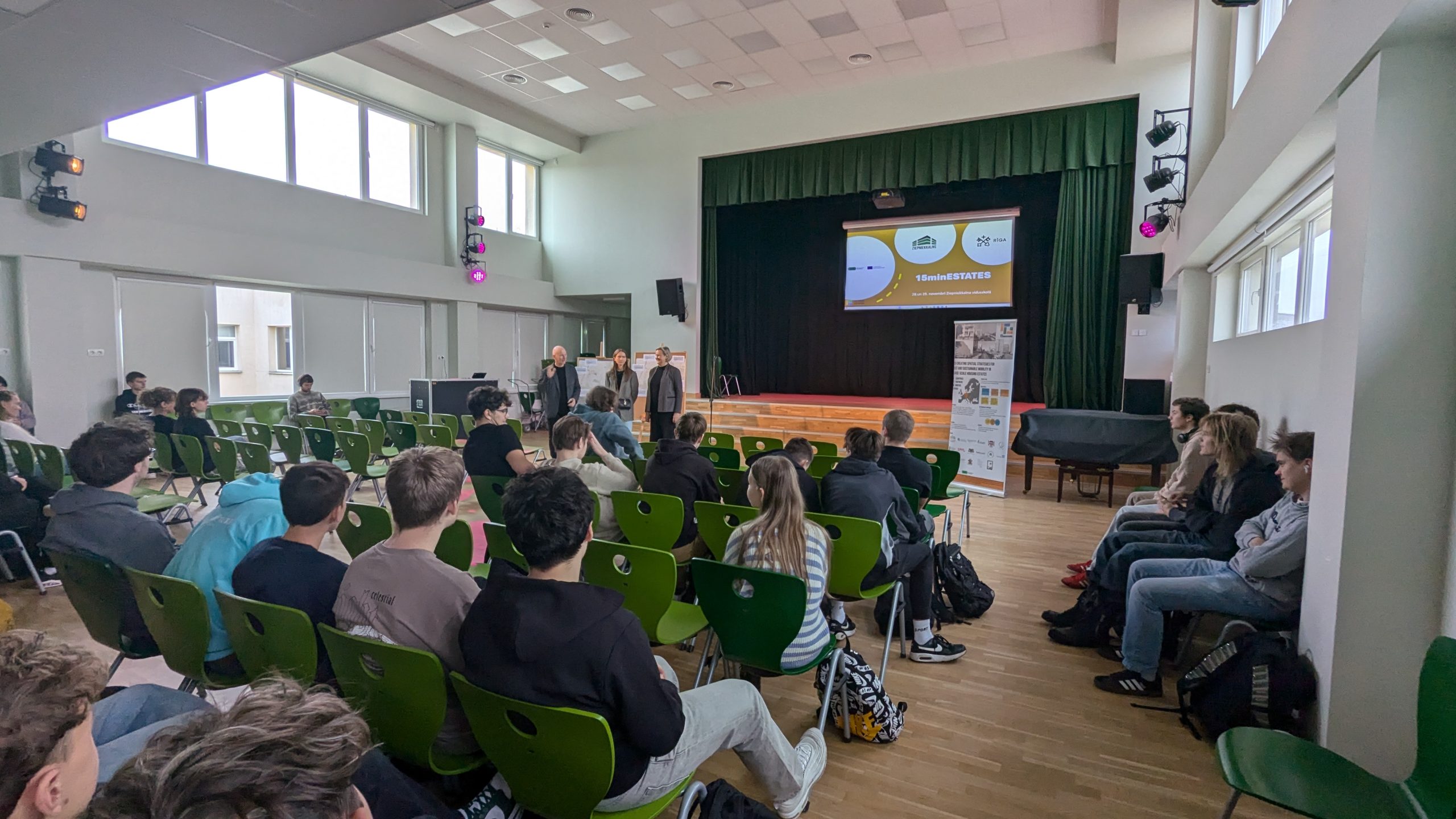
As a part of the ongoing collection of qualitative data on large-scale housing estates, Riga team organized a focus group discussion with senior residents living in Ziepniekkalns.
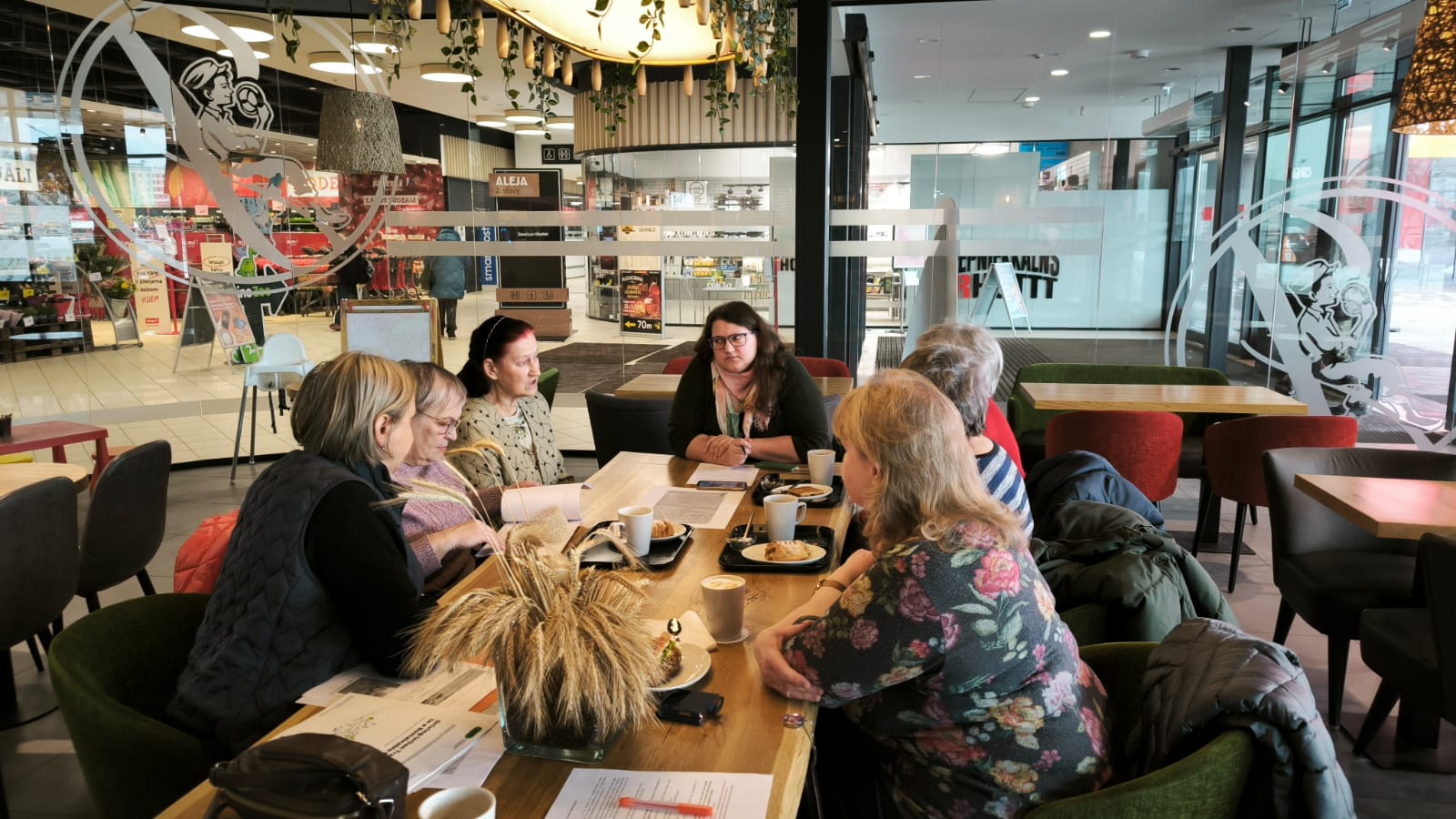
The focus group highlighted Ziepniekkalns as a neighborhood that remains highly walkable for daily needs, yet presents notable challenges in terms of comfort, accessibility, and quality of the urban environment. Participants emphasized that while most essential services are reachable on foot, mobility beyond the neighborhood depends heavily on public transport, which is often perceived as unreliable and uncomfortable, discouraging its use.
A key insight from the discussion is the importance of environmental quality for everyday well-being. Respondents expressed a strong need for safe, pleasant, and well-maintained spaces for walking without a specific destination, noting the decline of previously valued green areas and the negative impact of traffic and infrastructure changes. At the same time, lack of local social spaces, such as cafes or gathering places, limits opportunities for community interaction and reduces the attractiveness of staying within the neighborhood.
Despite these challenges, the discussions also revealed positive aspects, including a general sense of safety during daytime and appreciation for local events and improved pedestrian infrastructure in certain areas. Overall, the findings underline the need for more inclusive, human-centered urban interventions that enhance public space quality, improve mobility conditions, and strengthen local social life, particularly for aging populations.
Best wishes and season’s greetings!
As we look back on the second year of our project, we would like to extend our sincere thanks to each and every one of our partners, friends and supporters for your dedication, collaboration, and inspiration. Your commitment to advancing more inclusive, accessible, and sustainable cities continues to drive the project forward and strengthens our shared vision of improving quality of life for all.
As we enter 2026, we begin the final – and perhaps most exciting – year of the 15minESTATES project. We look ahead with great enthusiasm and confidence, and we wish all of us continued success, meaningful collaboration, and a productive year ahead.
Season’s greetings, and our very best wishes for a successful and inspiring 2026!

Active fieldwork in Delft
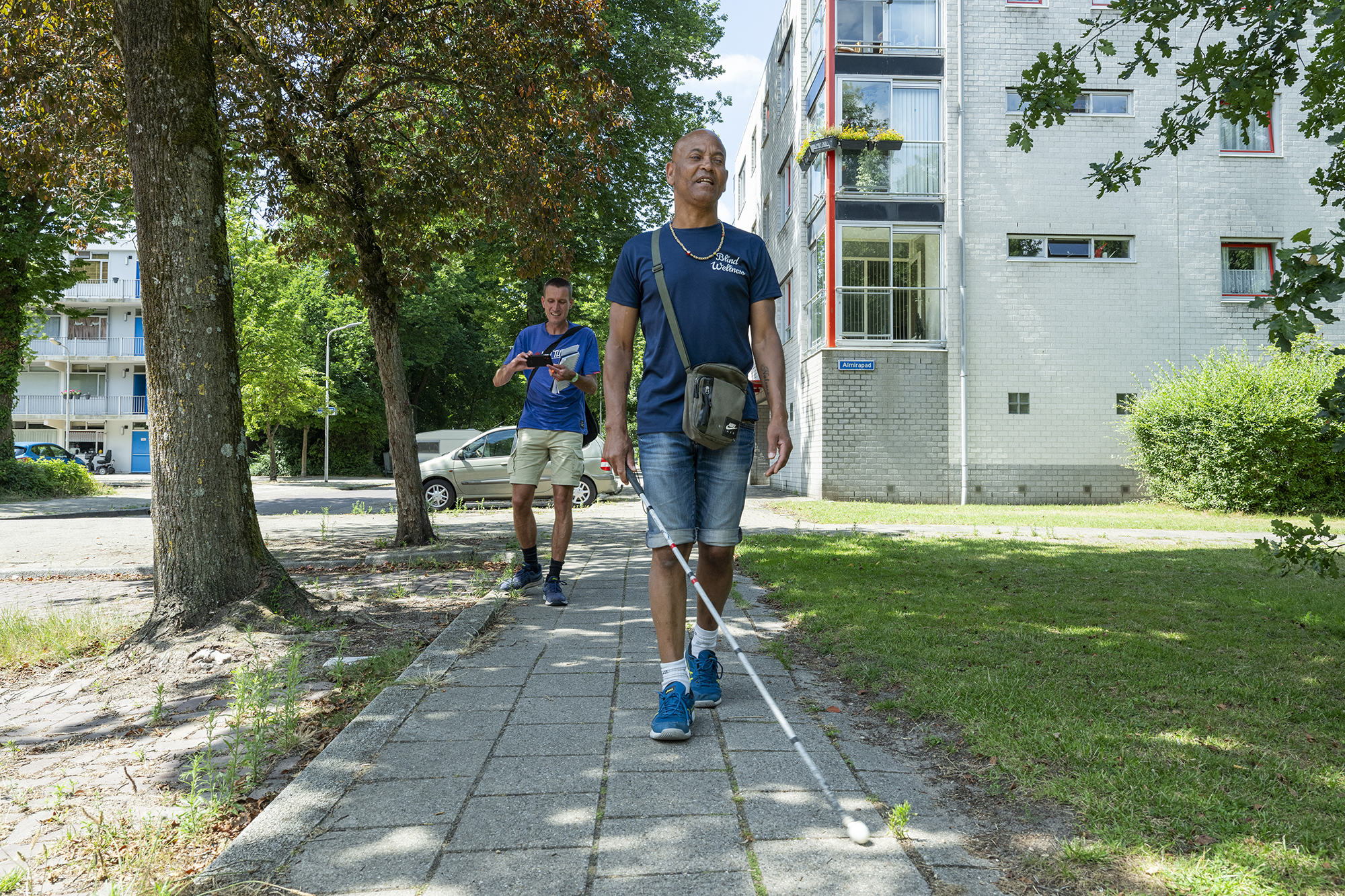
November has been a productive and insightful month for the Delft team. Alongside ongoing analyses, the team conducted numerous walking interviews and recently organized two focused workshops, each contributing valuable perspectives on local accessibility and mobility in Delft-West.
Walking interviews have allowed to gather a wide range of lived experiences from residents—covering their daily routines, interests, physical needs, and how they navigate their neighbourhood. These walks helps to understand not only where people go, but why certain routes, places, or services matter to them.
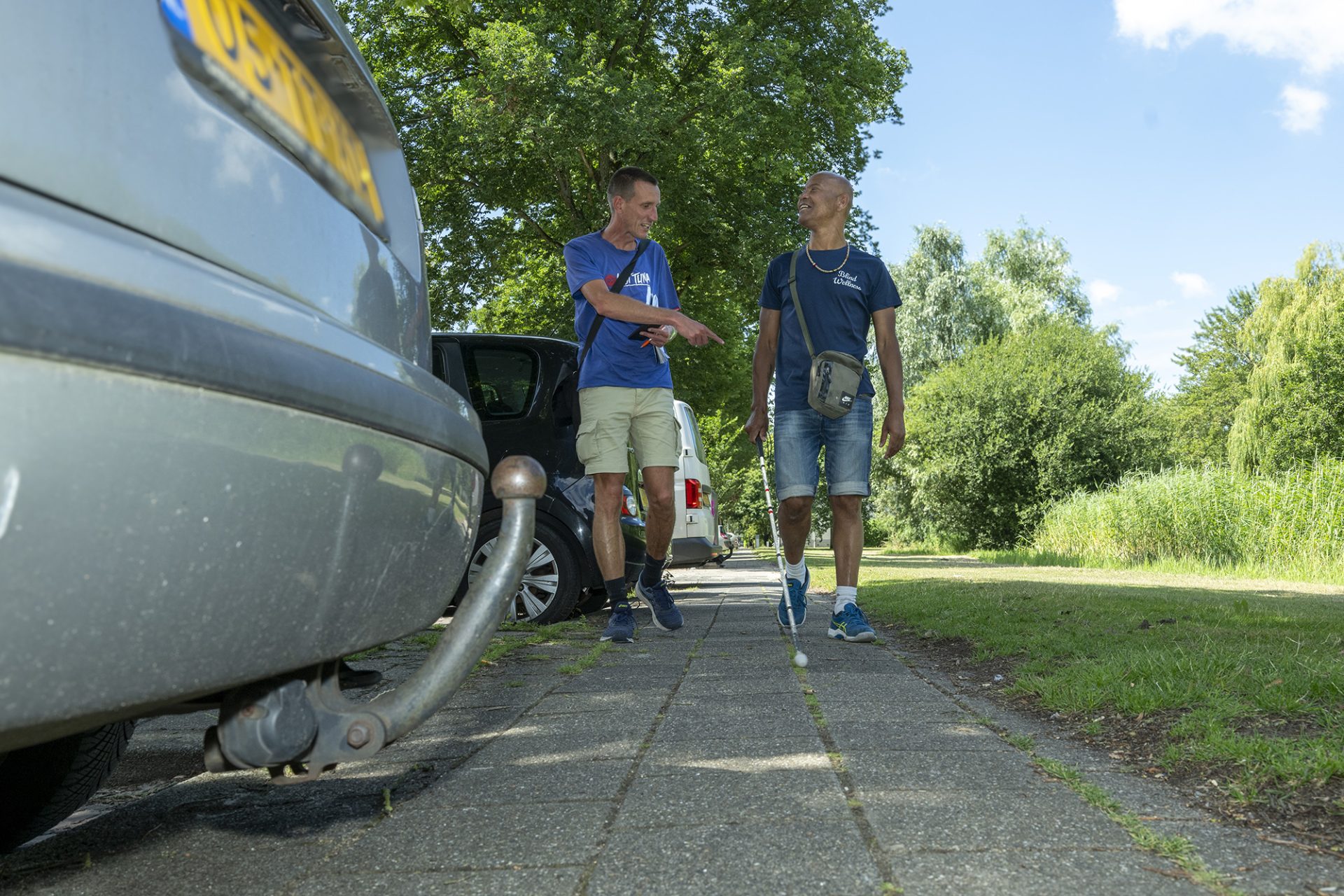
A glimpse into these experiences is shared in a recently published story, where a researcher reflects on how walking with residents can reveal overlooked aspects of the neighbourhood and show “the Gillisbuurt through different eyes.”
Read more here: https://www.tudelft.nl/en/2025/wijstad/seeing-the-gillisbuurt-through-different-eyesTo complement these individual insights, several workshops were held, the latest two being with Gemeente Delft that highlighted the importance of aligning neighbourhood-level insights with strategic planning and with residents of De Vijverhof where during a participatory mapping activity participants shared the places they enjoy, areas they avoid, and changes they feel would help them walk or cycle more comfortably.
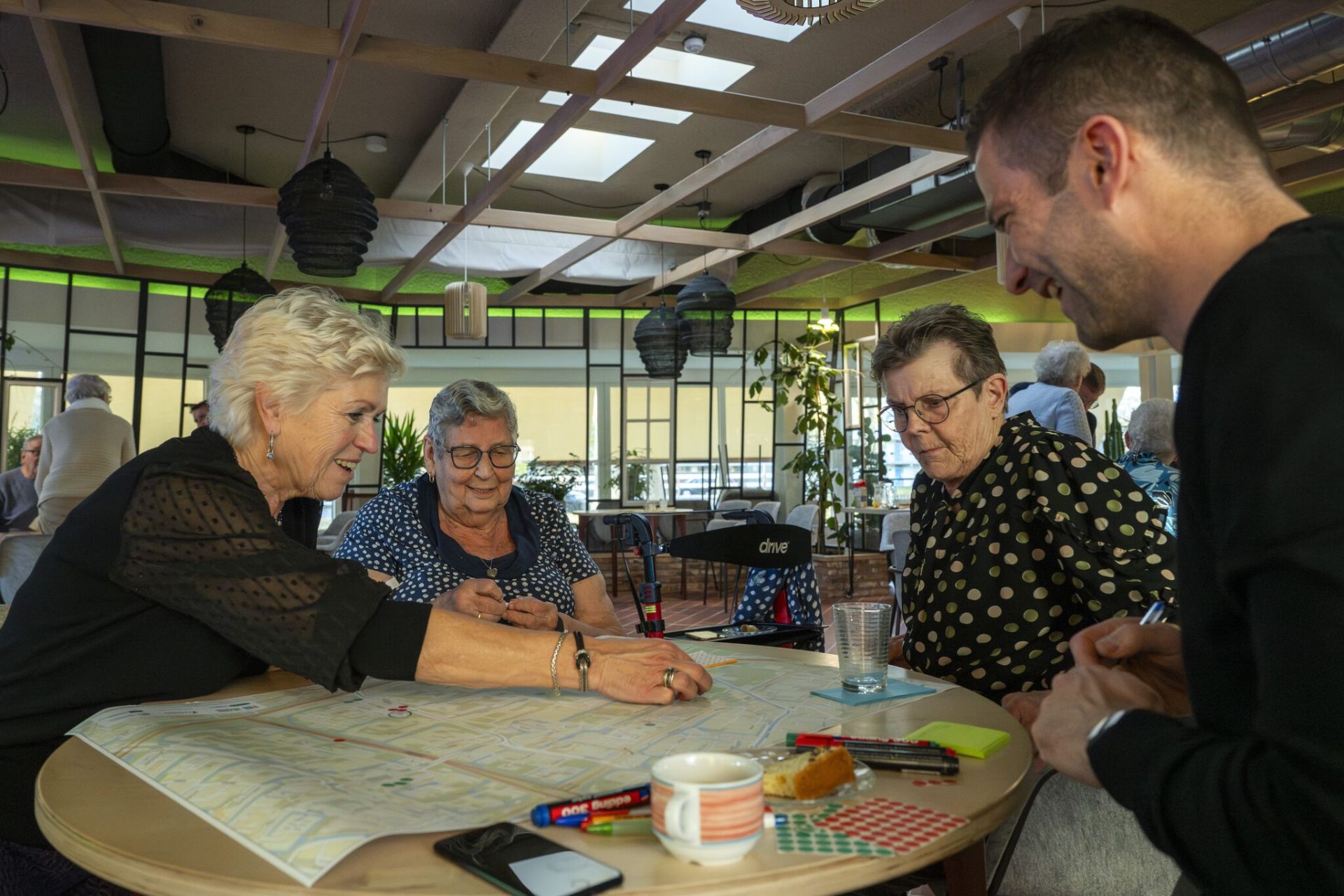
Though the workshops differed in format and focus, both offered meaningful input: municipal staff provided policy-oriented perspectives, while residents contributed practical, everyday experiences. Together, these viewpoints help build a more comprehensive understanding of what accessible and liveable neighbourhoods should look like.
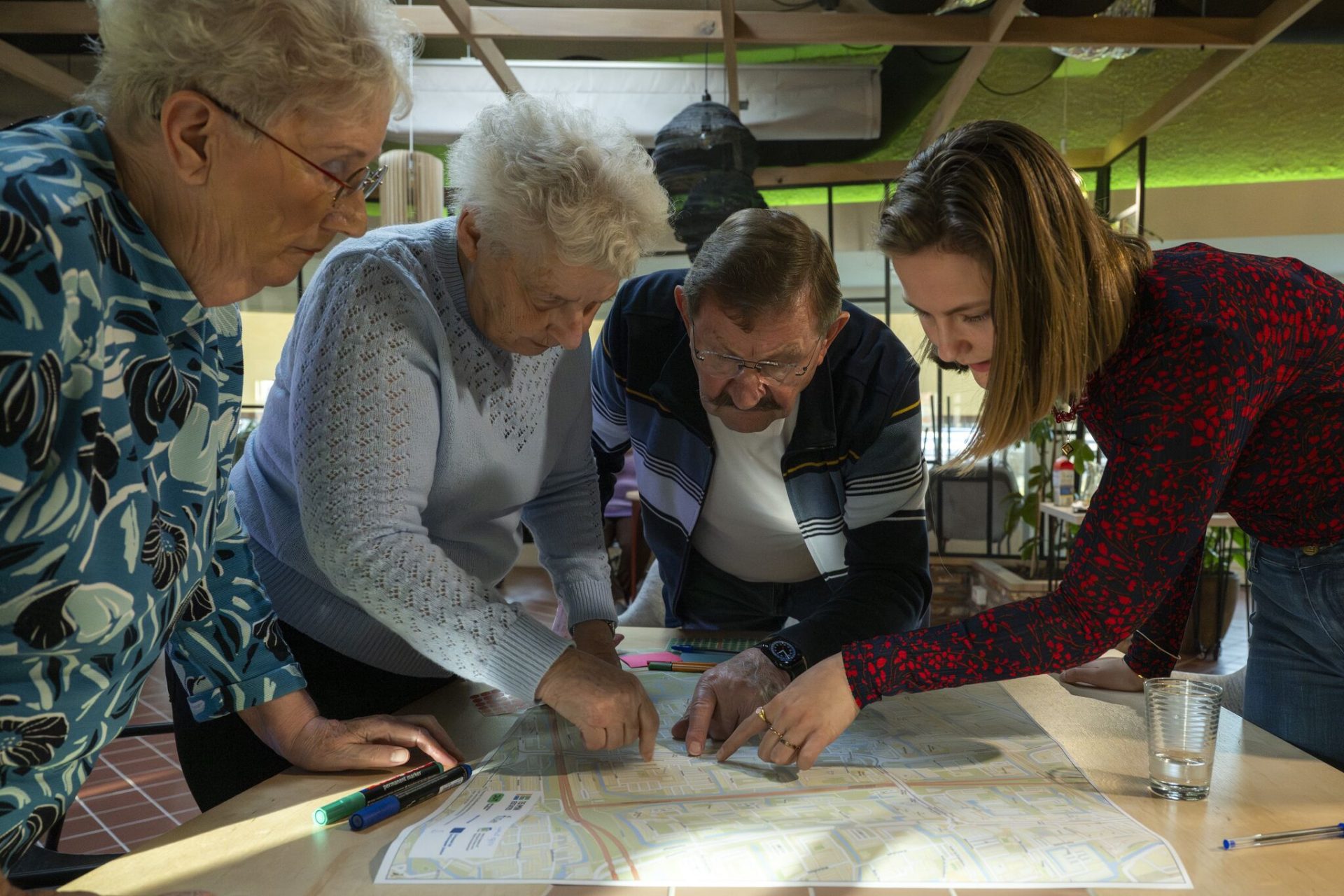
A key challenge moving forward will be reconciling residents’ needs with municipal plans and available resources. This balance is critical to designing interventions that are both feasible and impactful. More engagement activities and workshops are planned in the coming weeks as we continue this collaborative phase of the project.
Photo credit: research team and Floor Fortunati
Do Large Housing Estates Align with the 15-Minute City Concept?
The question of whether large housing estates (LHEs) can meet the principles of the 15-minute city is gaining increasing relevance as European cities seek more sustainable, inclusive, and accessible urban models. Researchers at the Leibniz Institute of Ecological Urban and Regional Development (IOER) are addressing this topic within the framework of the 15minESTATES project, applying a co-creative and data-driven approach to five case studies across Europe.
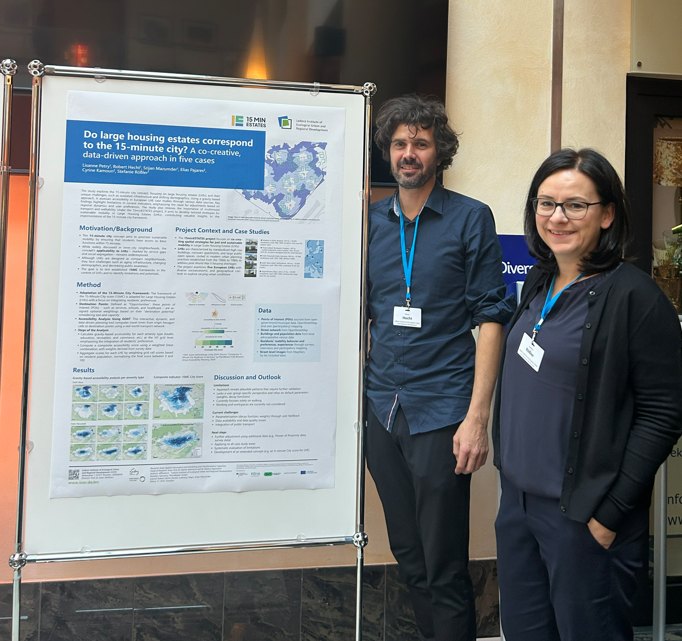
On 6–7 November 2025, the 15minESTATES project was represented at the Land Use Symposium 2025 (ILUS) in Dresden, Germany. Under the overarching theme “Spatial dynamics in an urban society,” the project team presented a poster outlining their methods and preliminary findings related to the assessment of 15-minute city maturity in large housing estates.
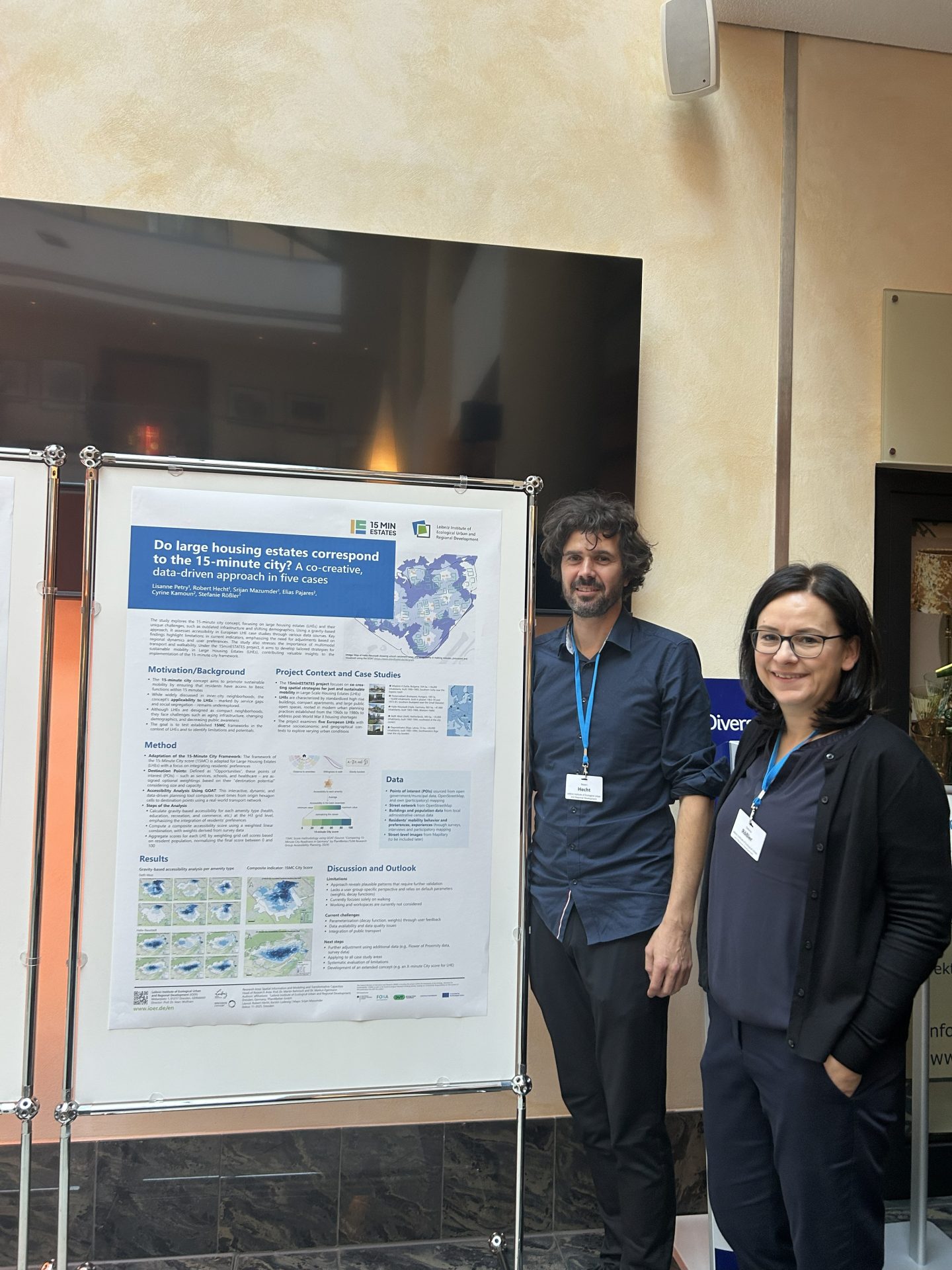
The study examines how well commonly used methods for evaluating 15-minute city characteristics can be transferred to the context of large housing estates—urban areas often marked by unique spatial, social, and infrastructural conditions.
To do this, the team applies a gravity-based accessibility approach that evaluates the availability and proximity of essential services, including:
- health and social services,
- educational facilities,
- commercial amenities,
- recreational spaces, and more.
This assessment integrates multiple data sources:
- official municipal datasets,
- OpenStreetMap data, and
- information gathered through participatory and co-creative processes involving local stakeholders.
Preliminary results indicate that while the 15-minute city concept offers a valuable framework for promoting proximity-based urban living, implementing it in large housing estates requires context-sensitive adaptation and close collaboration with local stakeholders.
Authors
Lisanne Petry, Robert Hecht, Srijan Mazumder, Elias Pajares, Cyrine Kamoun, Linda Hänchen, and Stefanie Rößler
II workshop series in Budapest
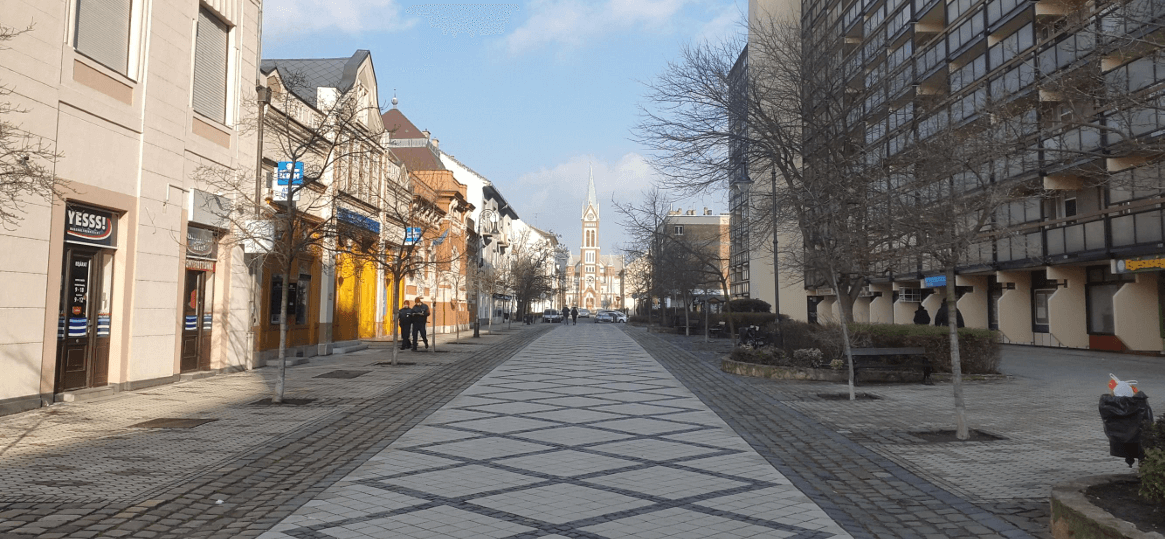
In September, the second workshop series of the 15minESTATES project took place in Budapest’s Pesterzsébet district, focusing on the future of the central housing estate. The two-day program combined a closed local workshop and a day of public events to explore how the 15-minute city concept could apply in this context.
On September 11, representatives of the municipality, local experts, civic organizations, community actors, and commercial partners gathered for the workshop “What and How Can We Change?”. Through group analyses and keyword-based discussions, participants defined key aims for improving everyday life on the estate, reflecting on both challenges and opportunities.
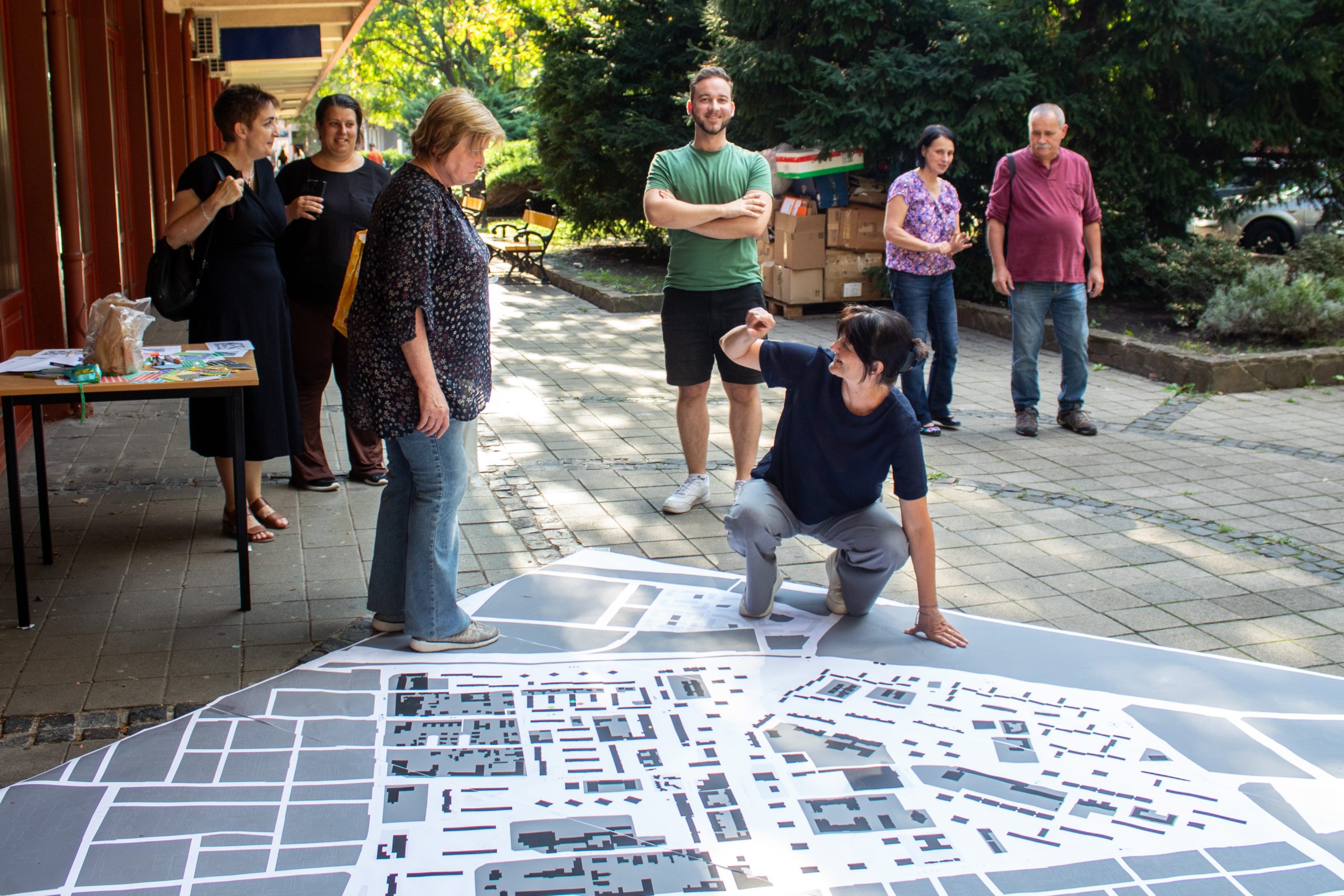
On September 12, the results of community data collection and joint mapping were brought to the streets. Three outdoor stations presented survey and interview findings, collaborative maps of routes and meeting points, and playful community exercises reimagining public spaces. These activities invited residents to share their experiences and ideas, making the project’s outcomes visible and open to contribution.
In the evening, the Csili Cultural Center hosted an exhibition and public presentations. On display were student design proposals, visualized survey results, and the entries of the Lakótelepesek photo contest, accompanied by reflections on international examples of 15-minute city development. The program closed with discussions on future directions and the role of collaborative planning in shaping a more livable and connected housing estate.
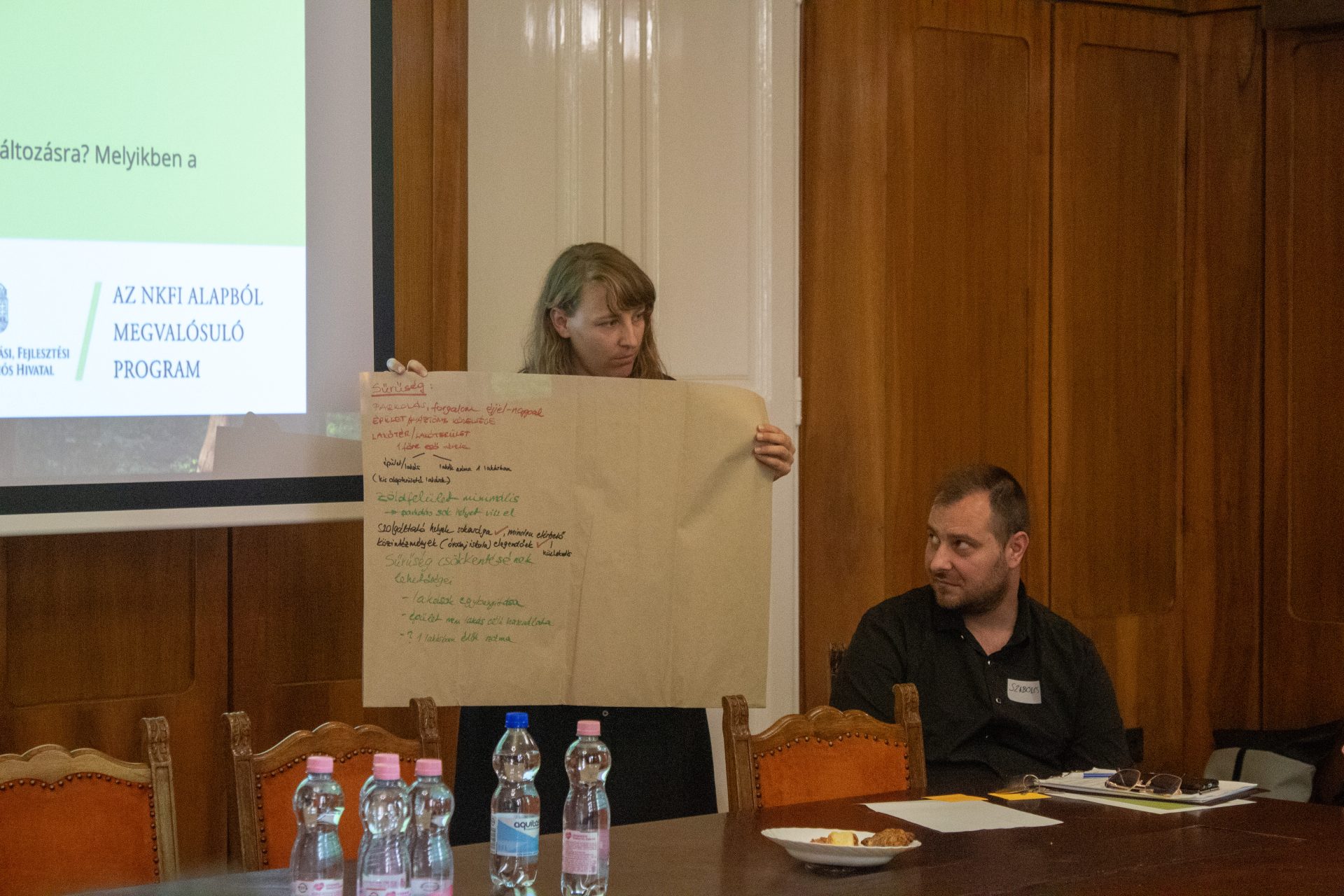
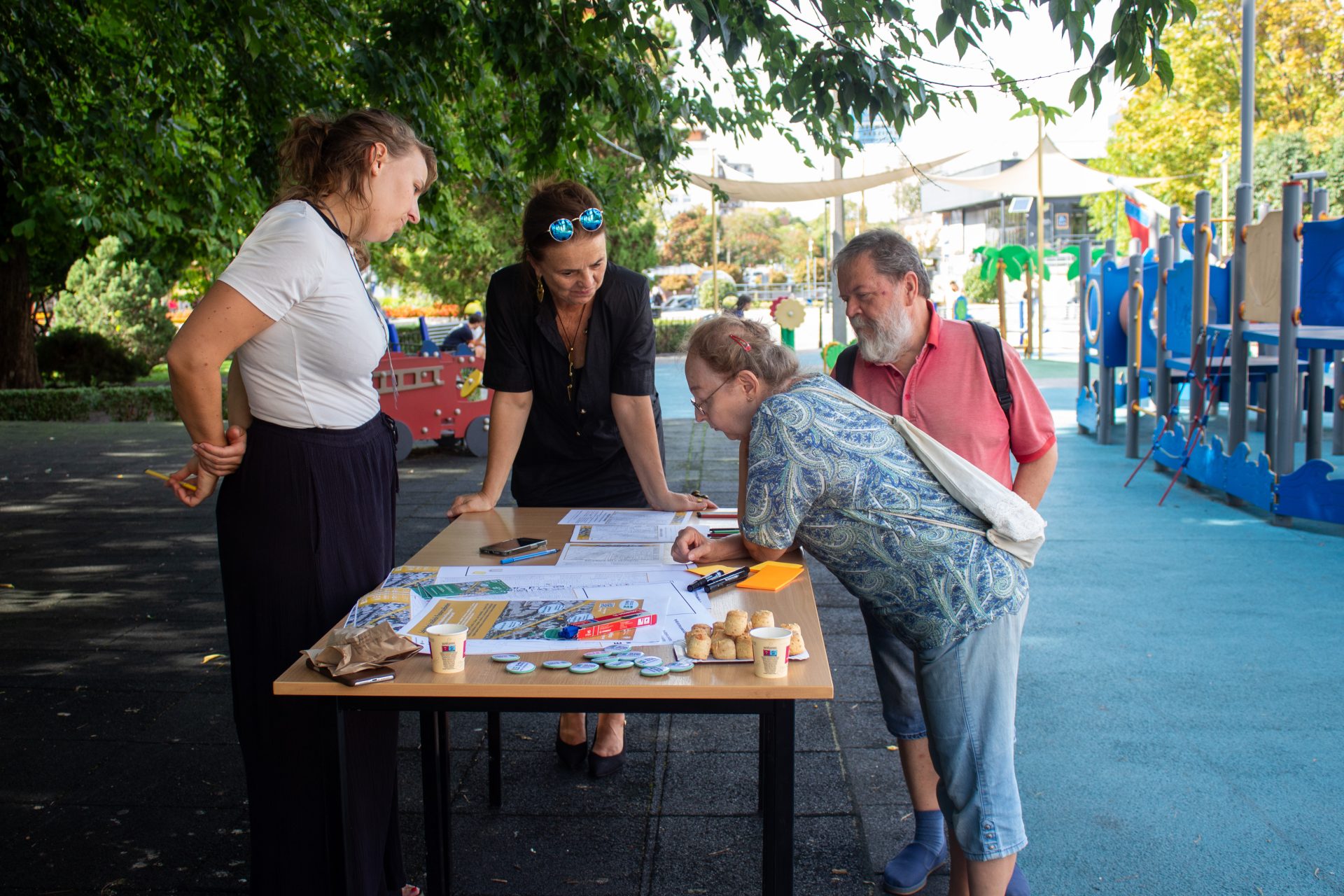
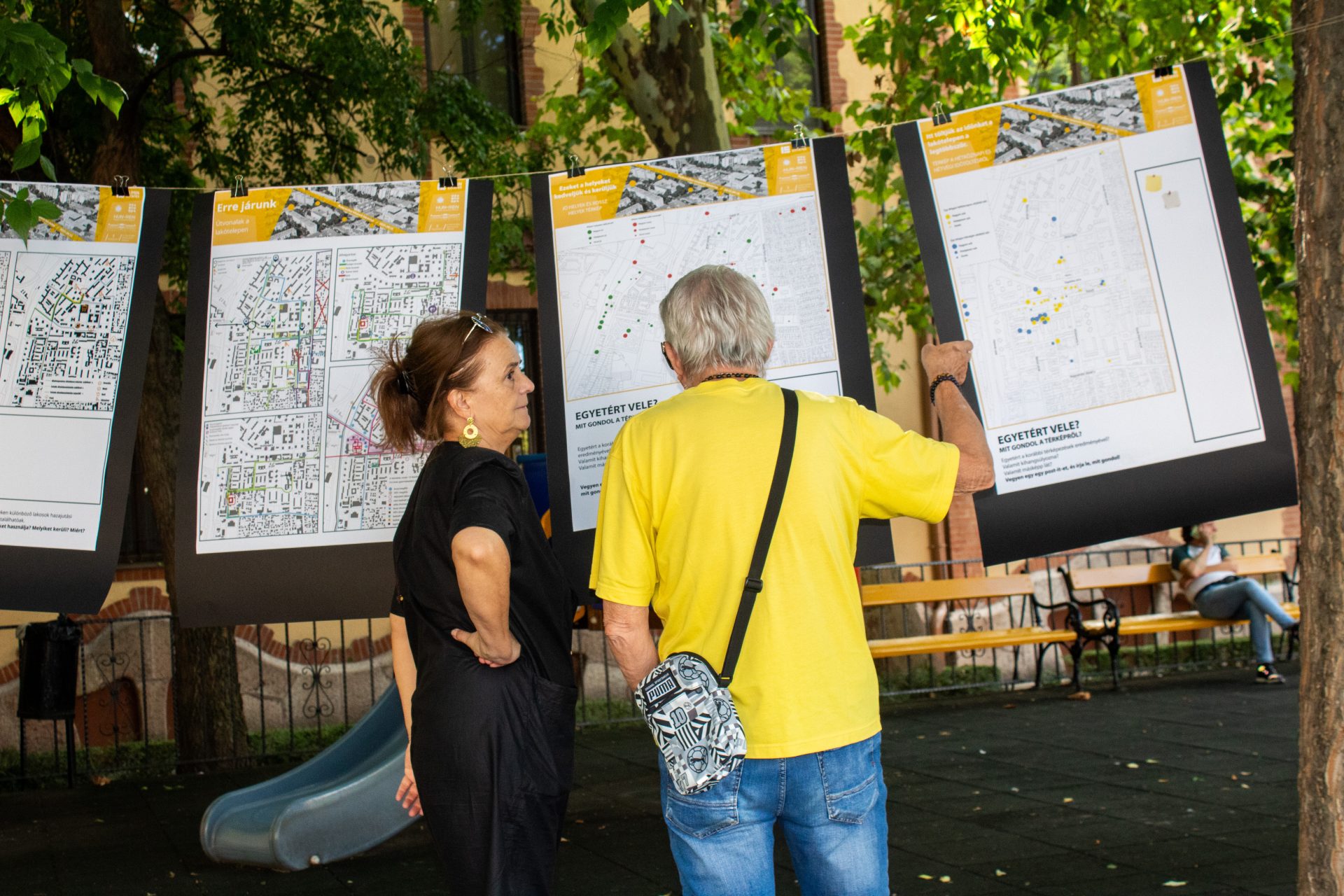
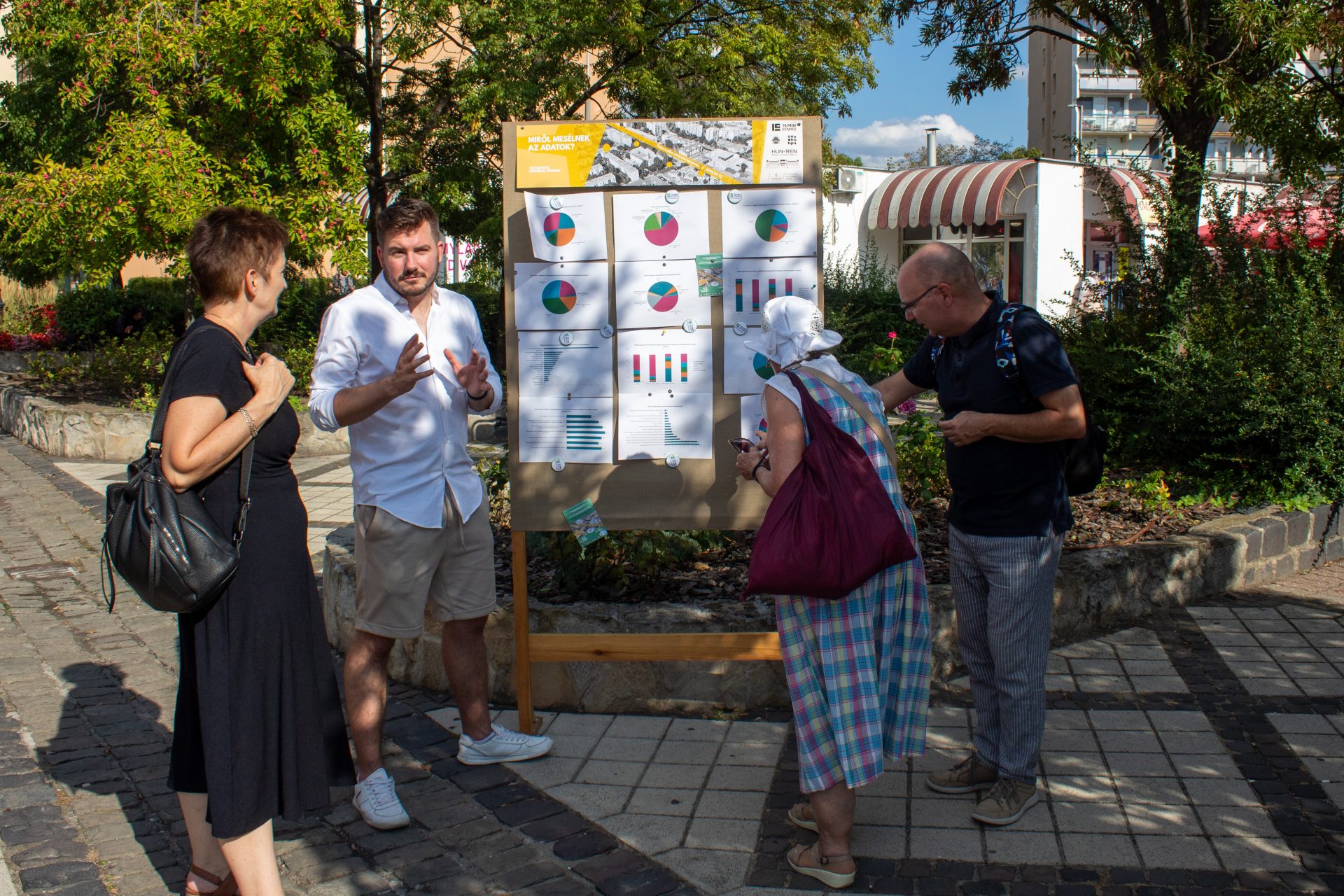
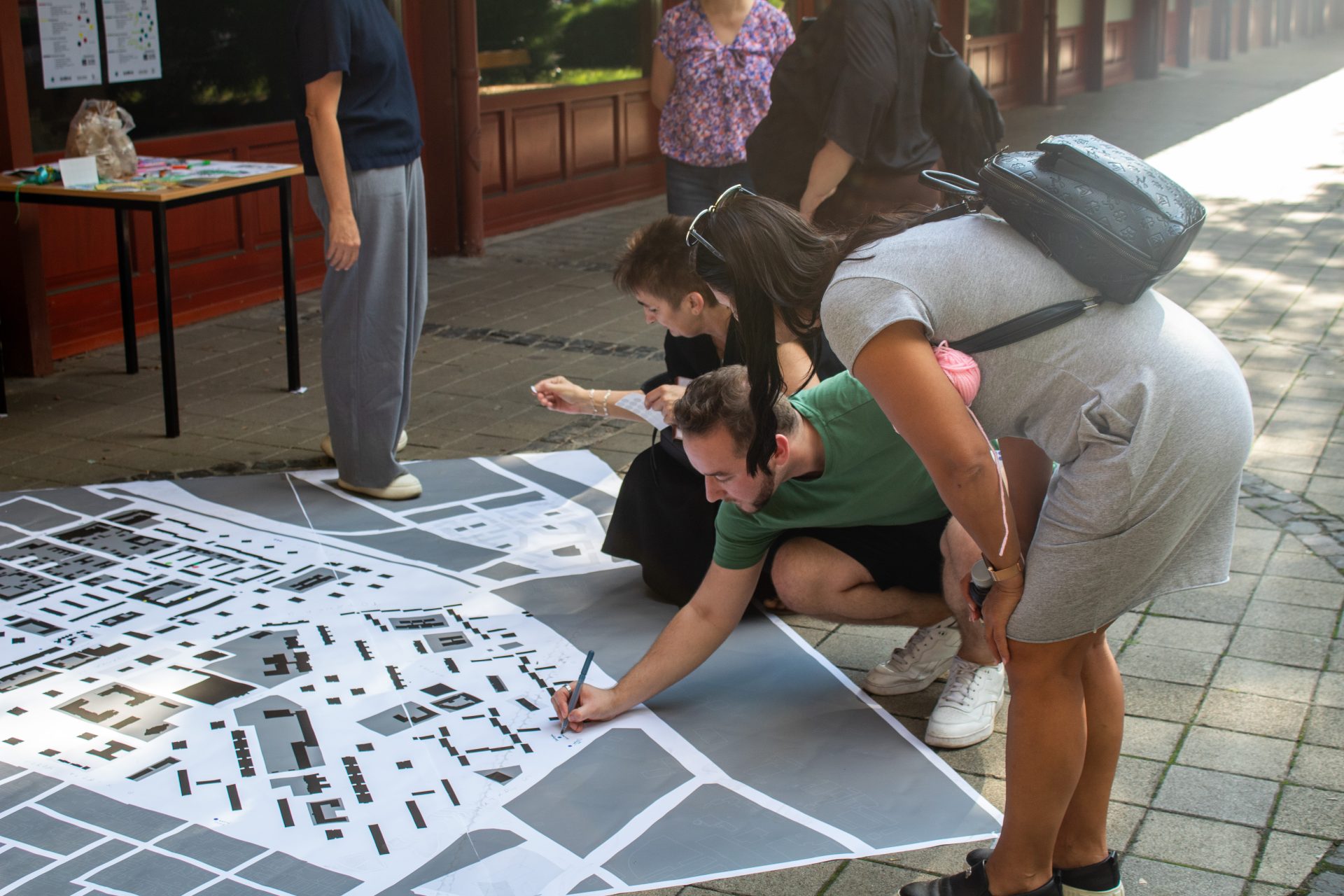
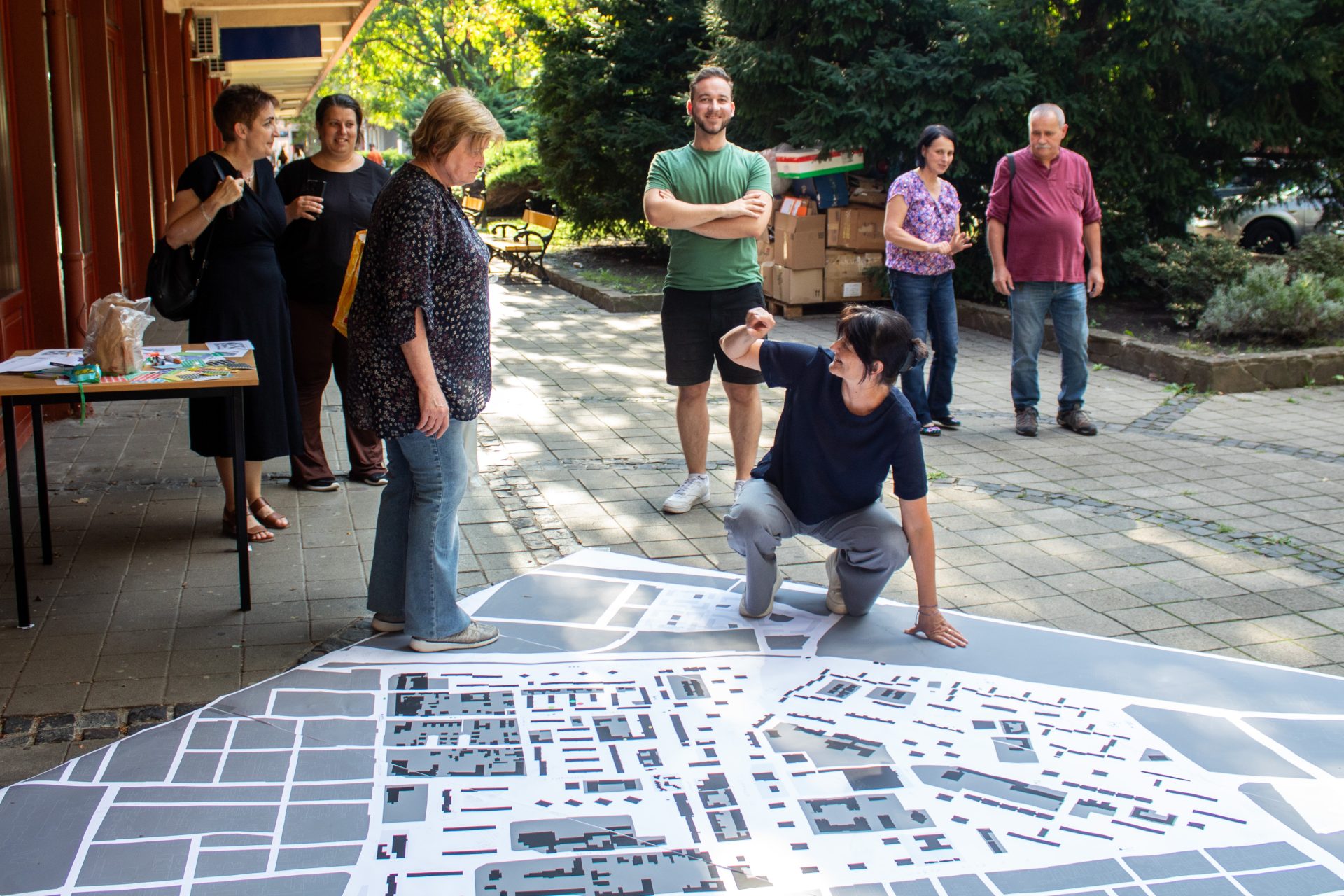
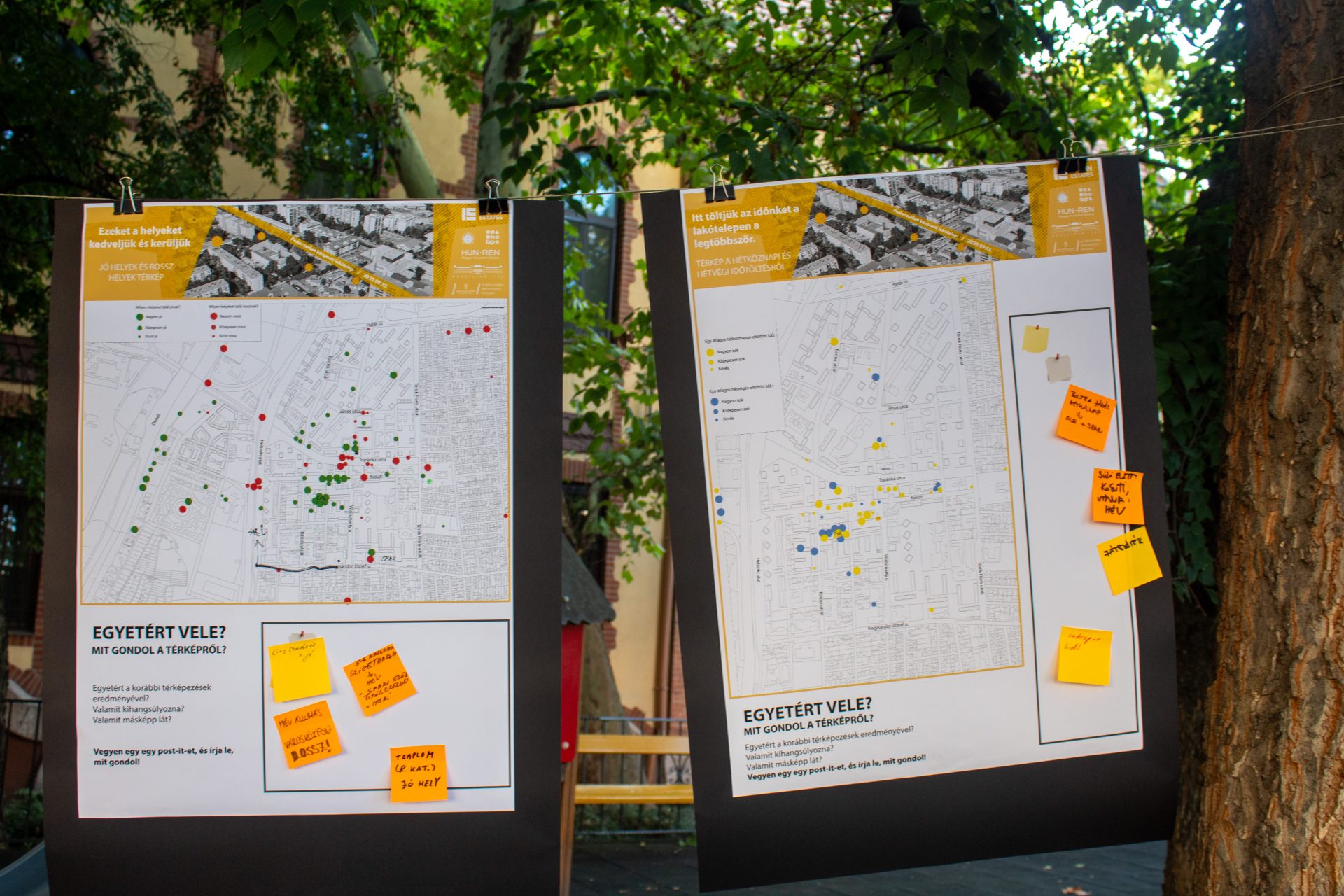
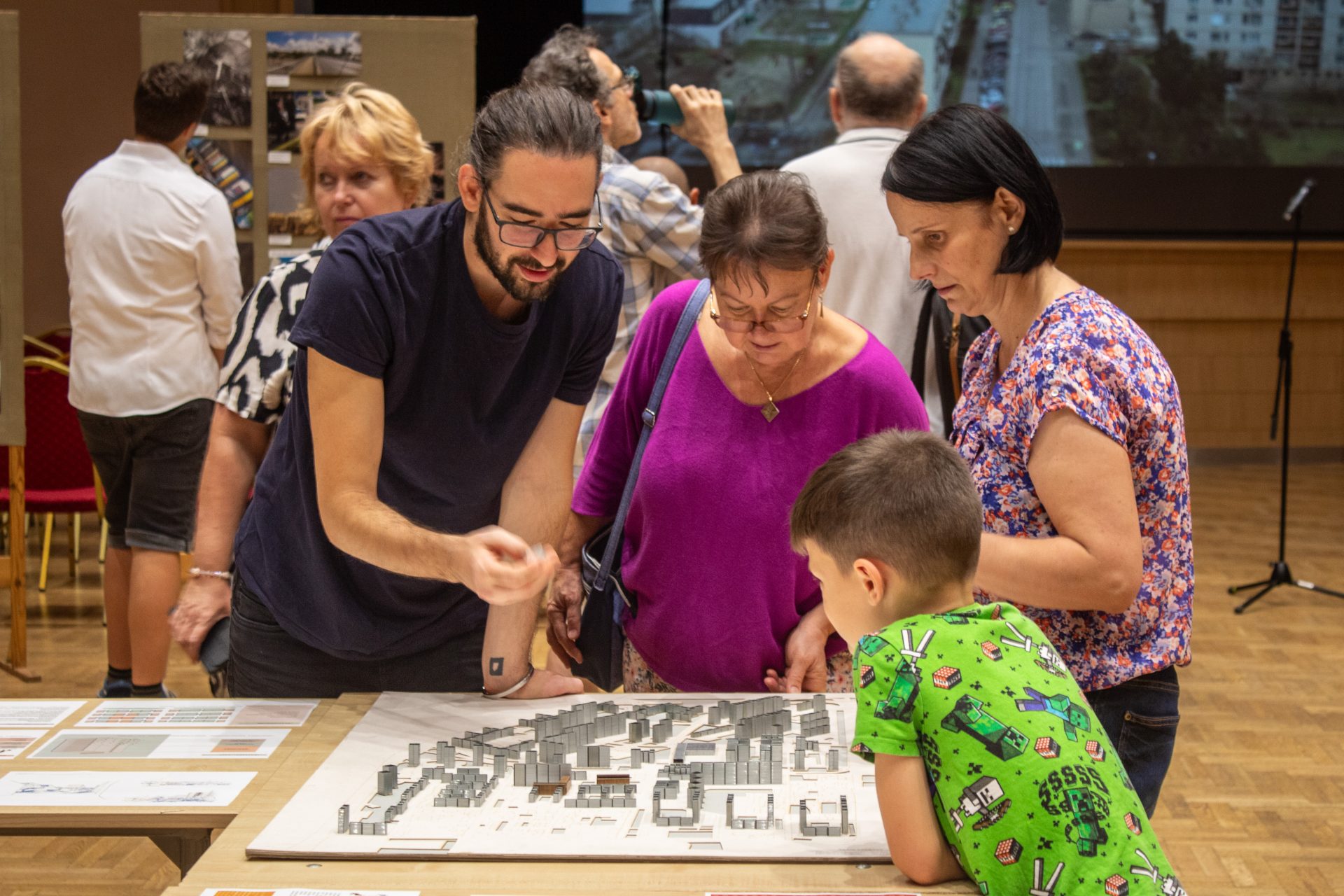
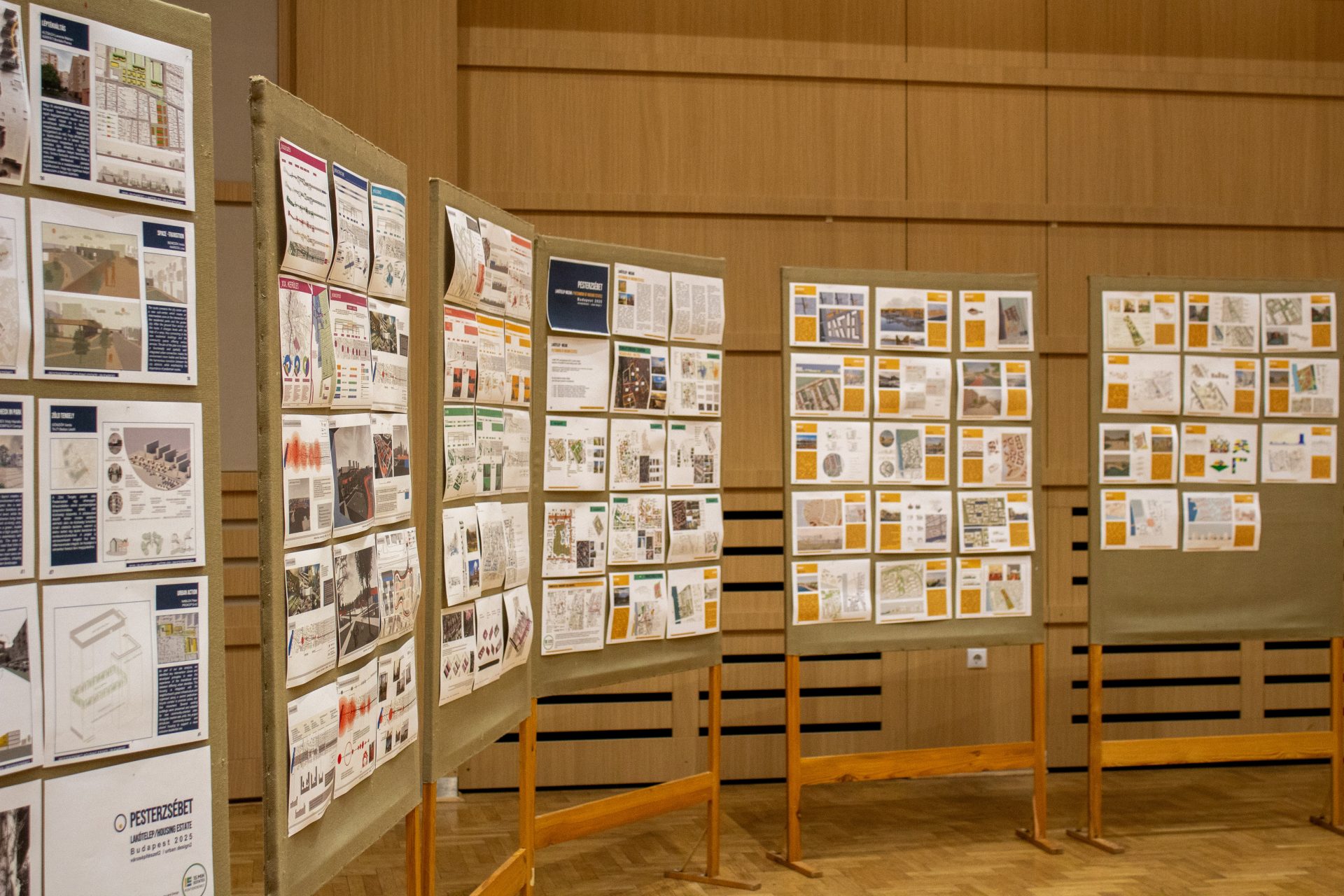
Photo Competition in Pesterzsébet Housing Estate
Author: Melinda Benkő, BME Department of Urban Planning and Design
The 15minESTATES project partner, the BME Department of Urban Planning and Design, in cooperation with the associate partner, the Municipality of Pesterzsébet announced a photo competition open to the public in July 2025.
BELOW or ABOVE, the photos must be taken in the Hungarian case study area, the Pesterzsébet Center Housing Estate.
BELOW / photos taken anywhere at street level outdoors, on a vehicle, or on the ground floor of a building
ABOVE / photos taken anywhere high up (from a window, terrace, roof, etc.)
The submission deadline is August 31, 2025, and the results will be announced on September 12, 2025, at 5 p.m. at the Csili Cultural Center in Pesterzsébet during the 15minESTATES second local workshop. The best photos will be exhibited in printed version within the subcenters of the housing estate, published on the webpage of the BME Department, and some of them will be used in the communication and other documents of the international DUT project.
The jury of the photo competition:
Tamás Fenes DLA, Prof. Sándor Pálfy DLA, and Bence Bene – BME Department of Urban Planning and Design,
Ildikó Bognár – chief architect of Pesterzsébet,
Imre Czúni – geography teacher, photographer, event organizer at the Csili Cultural Center in Pesterzsébet.
See the call (in Hungarian): https://urb.bme.hu/lakotelepesek-fotopalyazat/
Workshop in Halle reveals strengths in short-distance access and gaps in certain services
Author: Constanze Zöllter, IOER
In June 2025 second workshop series started in Halle-Neustadt bringing together city officials, local initiatives, and residents for a discussion on accessibility of key amenities and the district’s development as a 15-minute estate. Discussion revealed both strengths in short-distance access and gaps in certain services. Participants shared experiences, identified local needs, and contributed ideas for future improvements, highlighting the value of collaborative engagement in shaping the area’s livability and informing the project’s next steps.
The event facilitated a lively exchange between representatives of the city administration – including departments for urban development and green space planning, public transport and mobility planning, Smart City , social planning, and educational development – and local initiatives such as street workers, neighbourhood management, and organizations focused on senior citizen support.
The project team presented the results of one and a half years of project work. This included, in particular, the visualization of the accessibility of different infrastructure facilities in Halle-Neustadt and its characteristics as a 15-minute city. Participants also gained a first insight into the results of the population survey conducted over the past year.
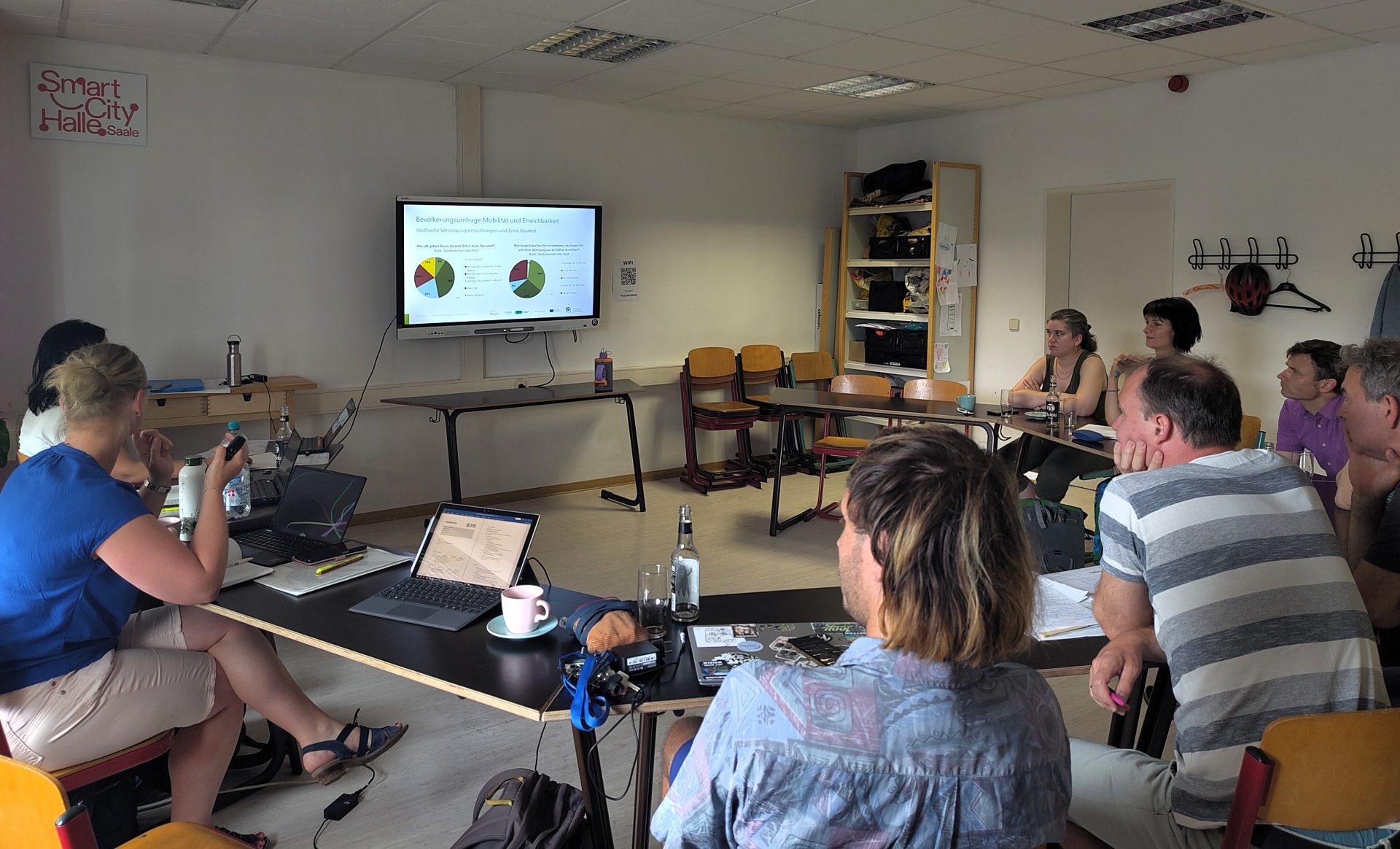
Photo: Maja Seehaus
Preliminary findings confirm that Halle-Neustadt is a city of short distances: many key amenities can be reached within 15 minutes. However, it also became clear that there are deficits in certain offerings – especially in facilities that are no longer available in the district, such as restaurants, meeting points, or specialist medical practices.
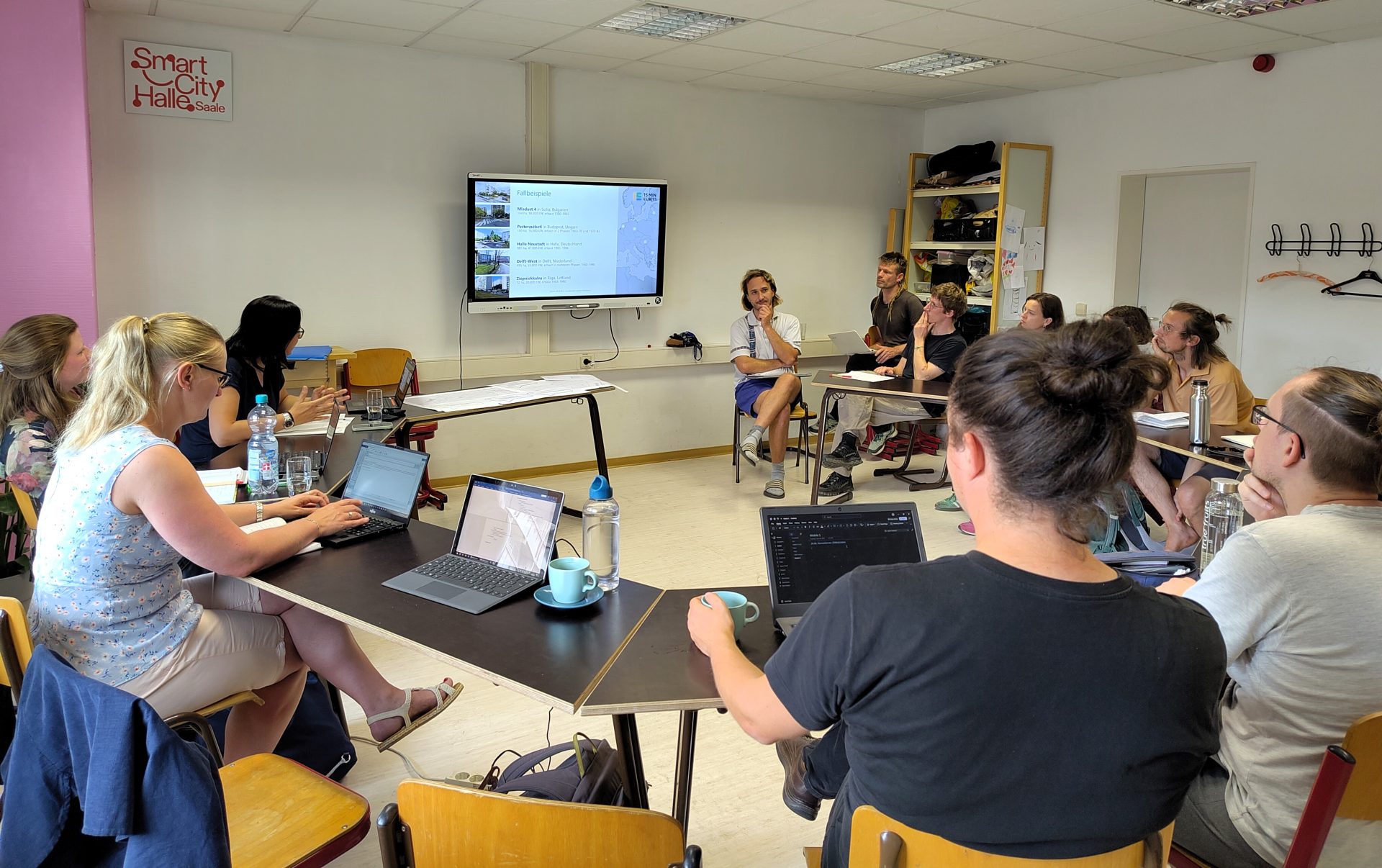
Photo: Maja Seehaus
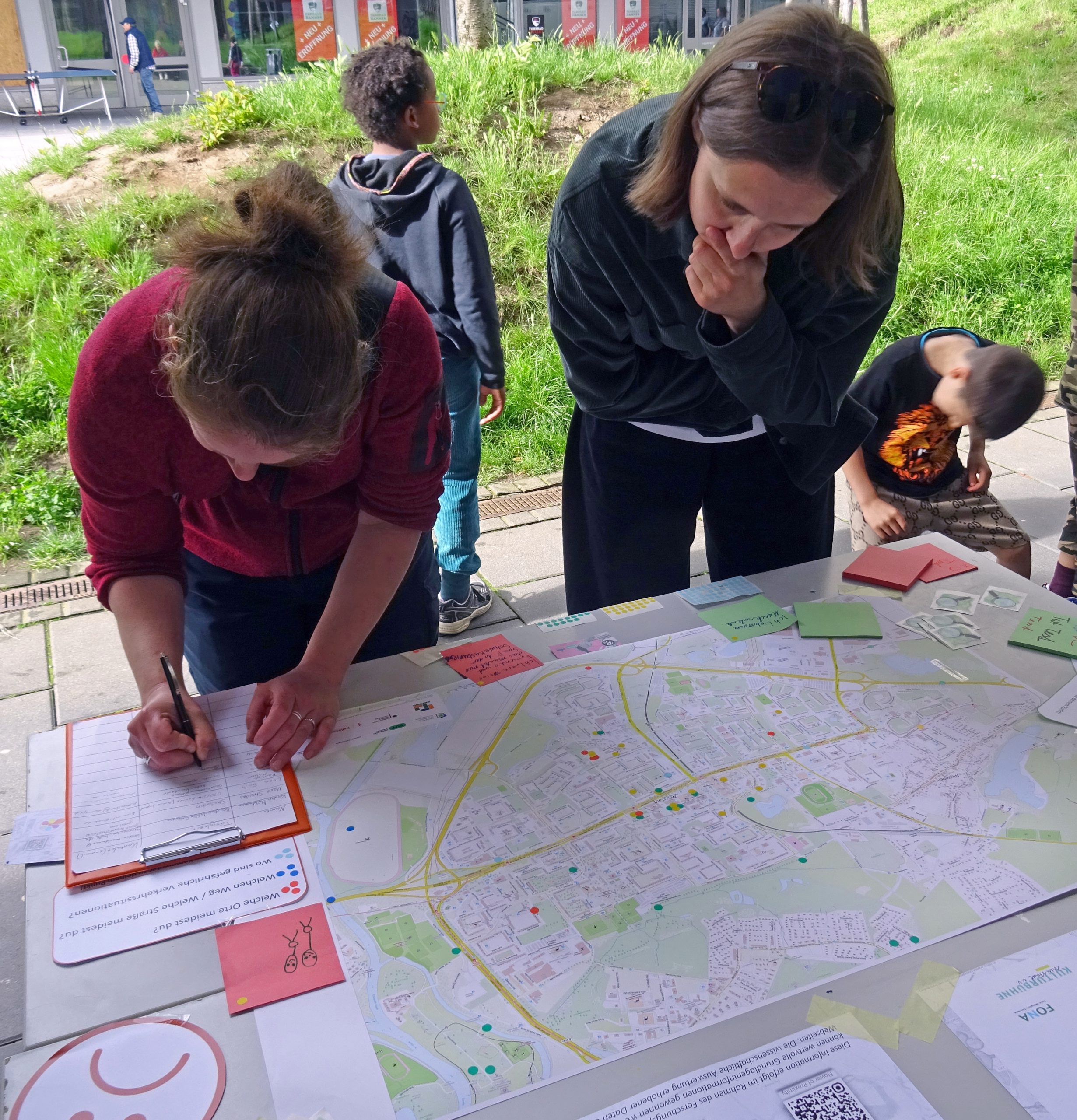
As part of so-called neighbourhood maps, residents had the opportunity over the past year to describe places where they enjoy spending time or going for walks. They could also identify areas where dangerous traffic situations or conflicts between different modes of mobility regularly occur. These findings were also discussed and reflected upon during the workshop, and initial ideas for possible interventions and future development strategies were collected. Overall, local practice partners very much appreciated the added value of the preliminary results and discussed conclusions and further ideas for the project with the research team.
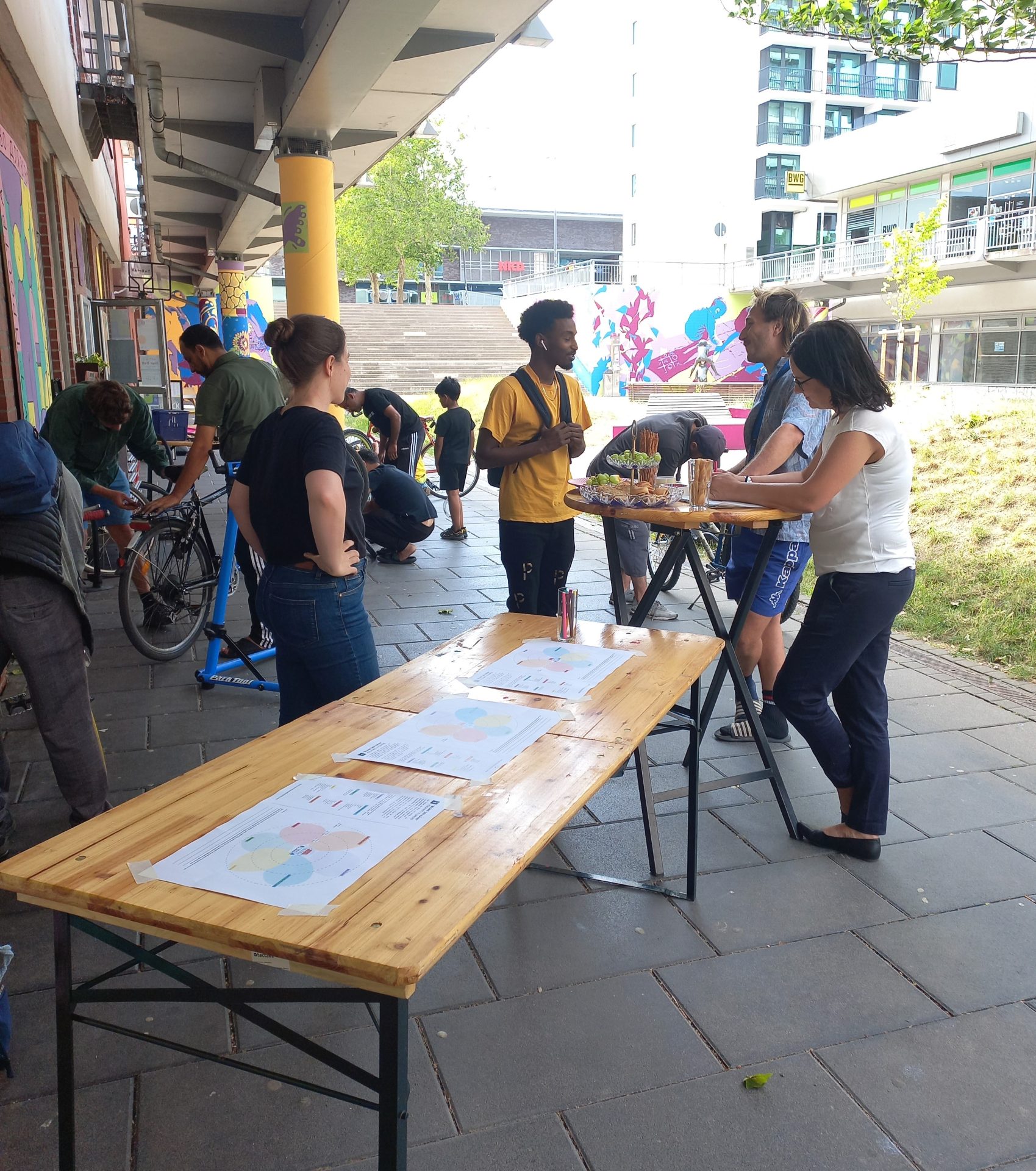
Photo: Constanze Zöllter
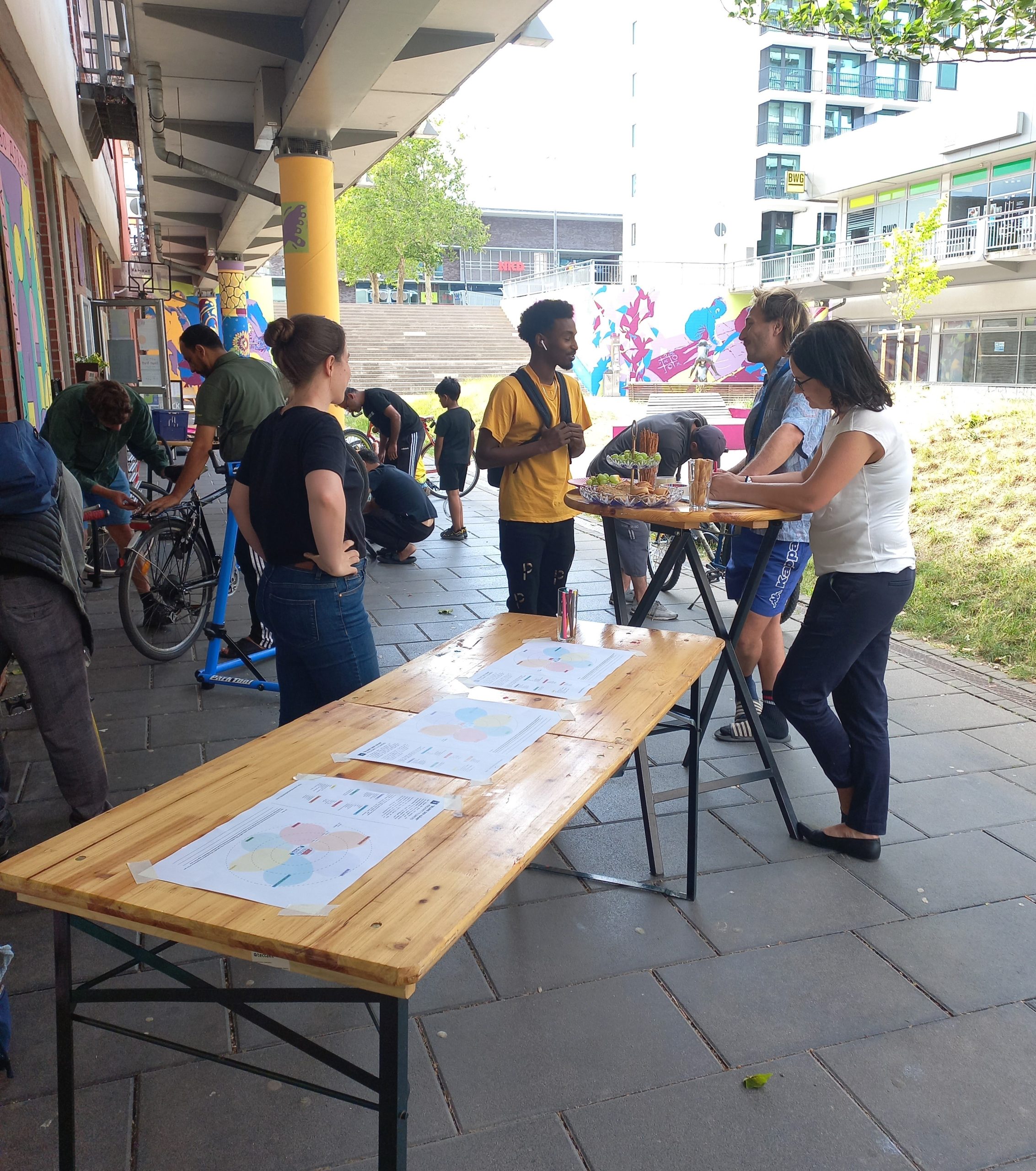
To continue the dialogue with the local population, an interactive activity was offered as part of the open bicycle workshop of Passage 13: passers-by could record their desired distances to various amenities in the so-called “Flower of Proximity.” This participatory method makes it possible to better capture the needs and wishes of local residents and to incorporate them into further project work.
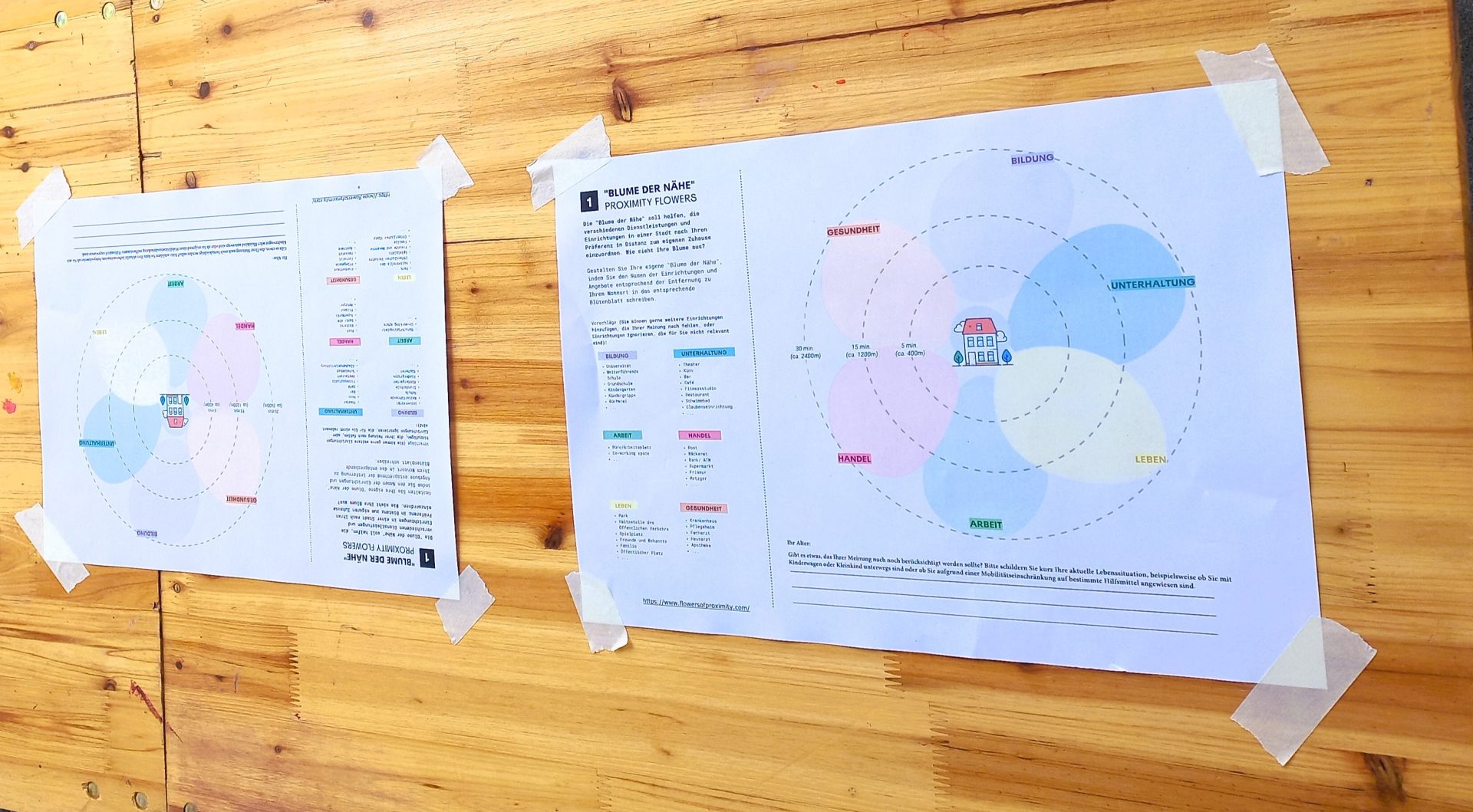
Photo: Constanze Zöllter
Once again, the workshop demonstrated the importance of collaboration between the administration, local initiatives, and the population in further developing Halle-Neustadt as a livable and future-oriented 15-minute estate. The collected insights and suggestions will now feed into the next steps of the project.
15minESTATES in AESOP: discussing Connection and Social Networking Quality in a 15-minute City Concept
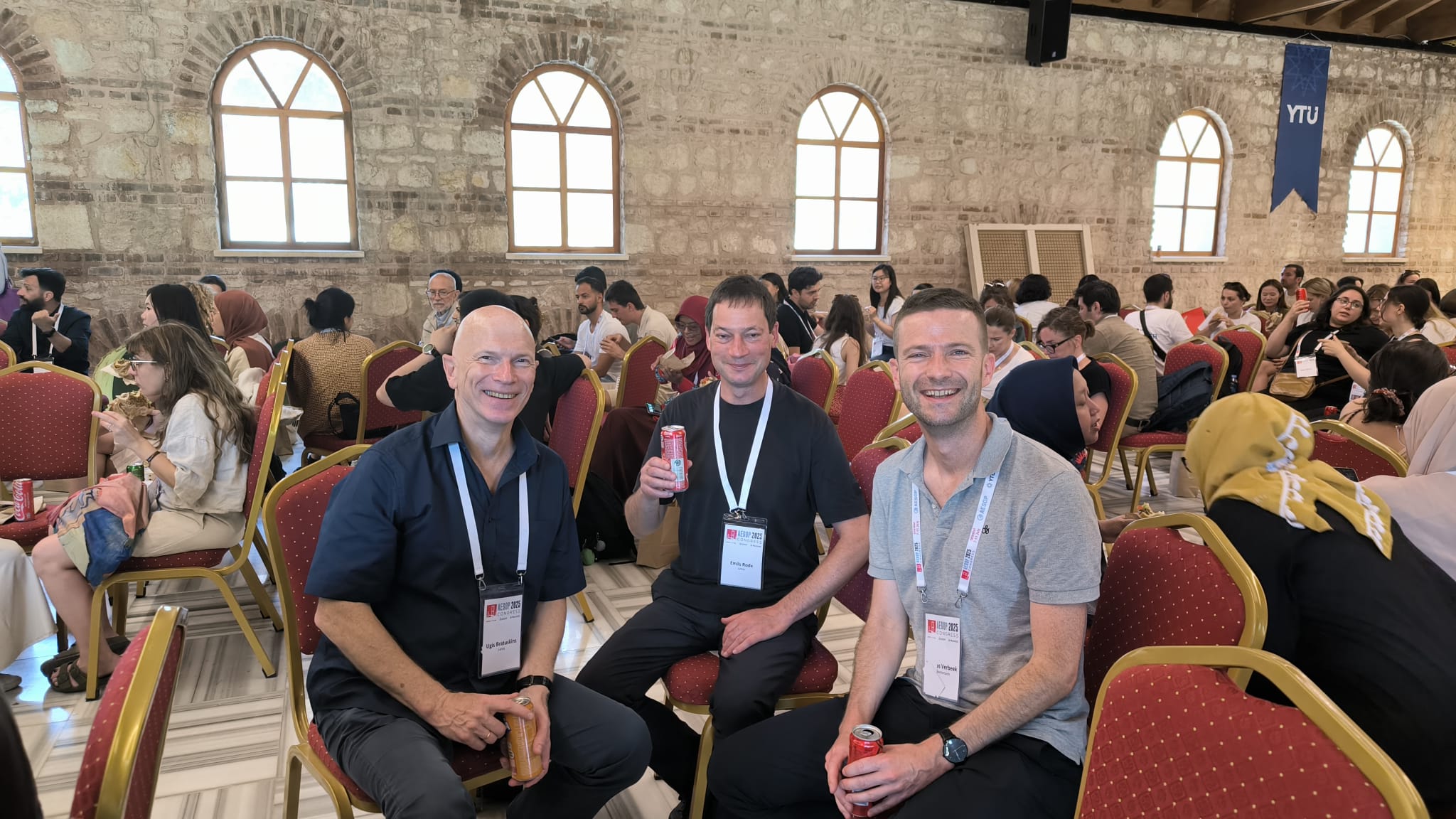
15minESTATES project representatives researchers professor Uģis Bratuškins, assist.prof. Alisa Koroļova from Riga Technical University (RTU) and profesor Thomas Verbeek from Technical University of Delft attended the 37th AESOP Congress “Planning as a Transformative Action in an Age of Planetary Crisis” in Istanbul.
On the 8th of July Alisa and Uģis presented the project to the participants of the AESOP congress and gave presentation “Daily Mobility and Public Open Space in Large-scale Housing Estates: Connection and Social Networking Quality in a 15-minute City Concept” within the session “Planning, design, and research for sustainable mobility”.
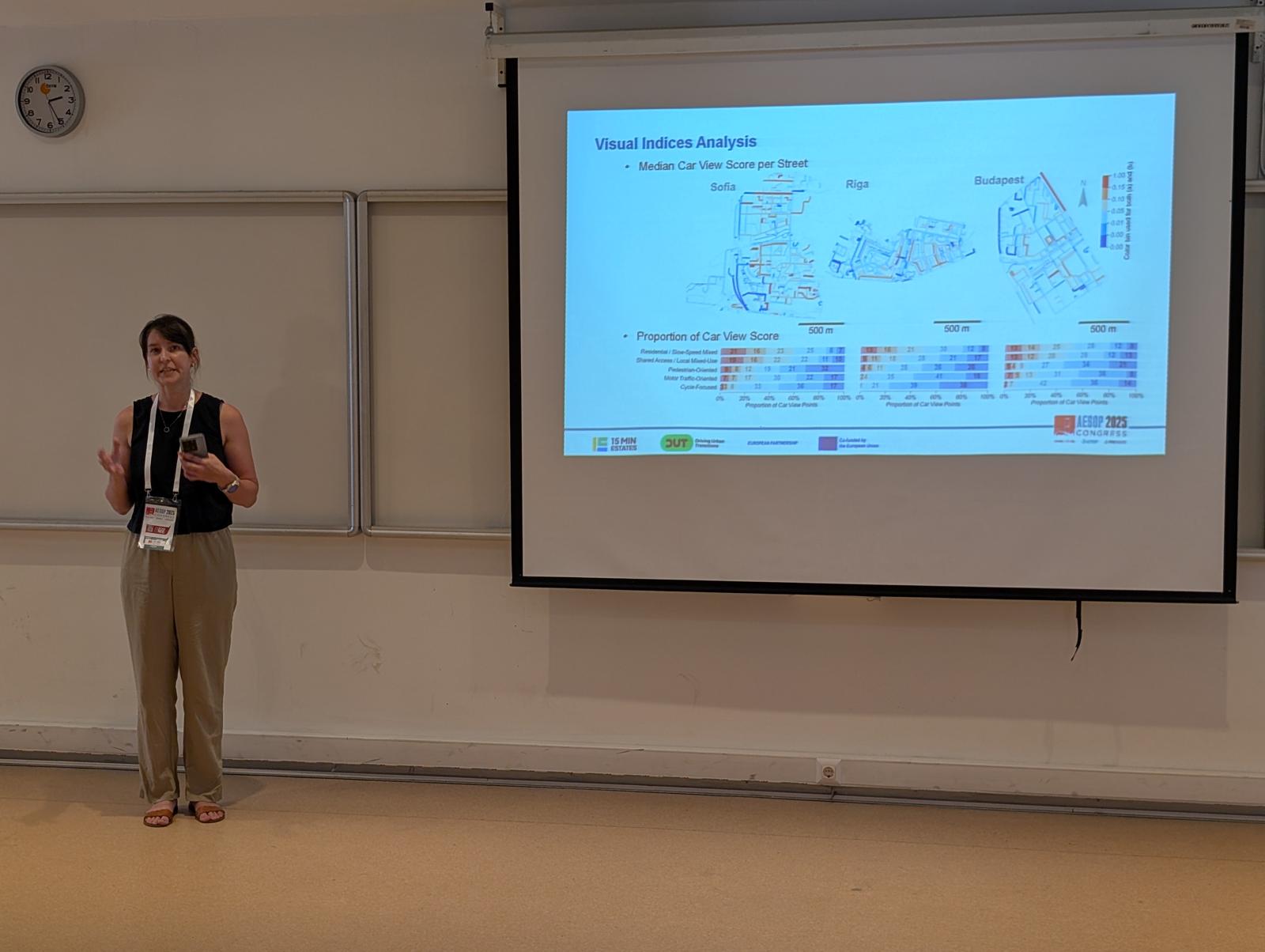
Photo: Thomas Verbeek
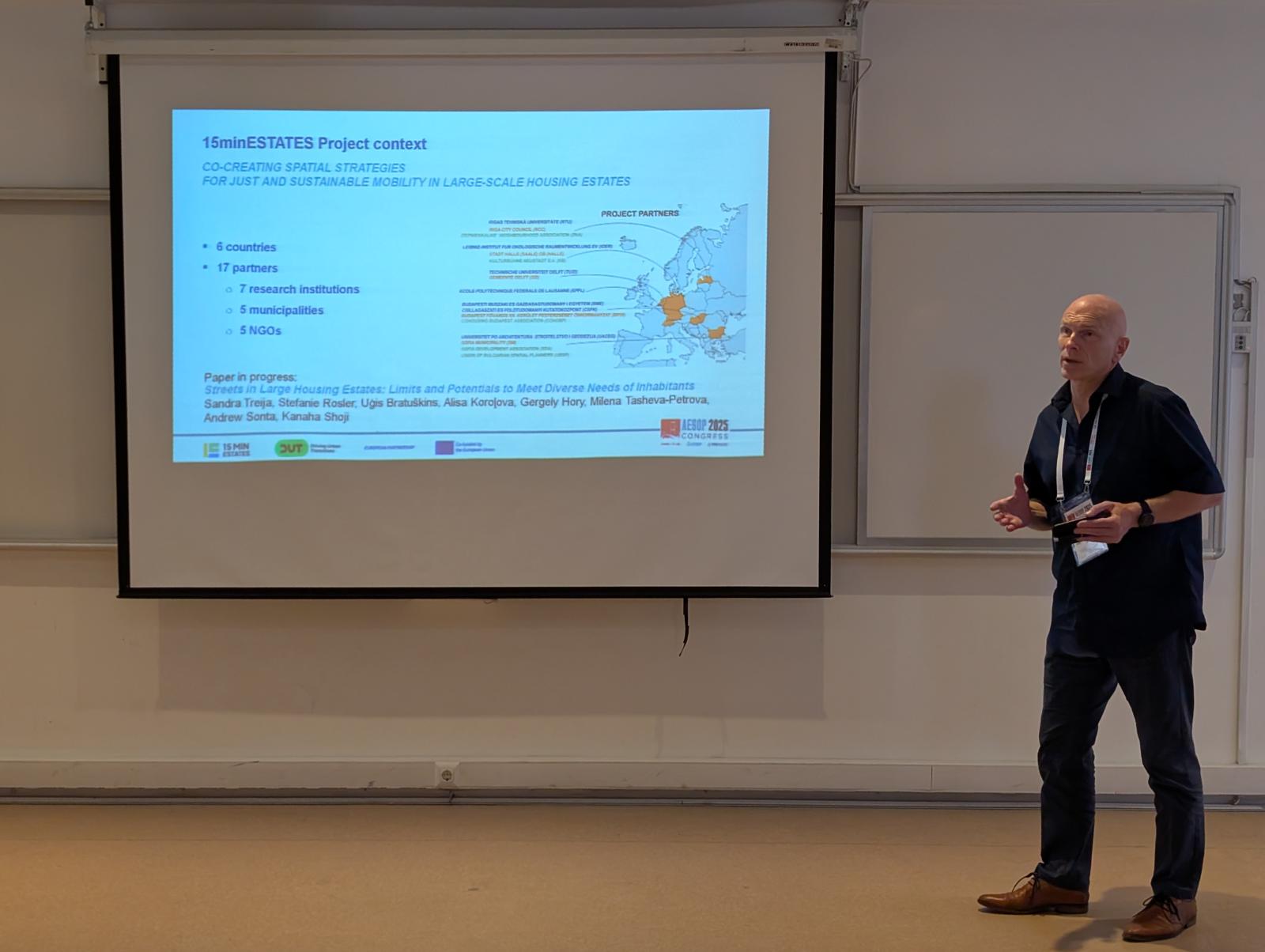
Photo: Thomas Verbeek
On the 10th of July Thomas presented the very first glance of our resident survey results “Local Accessibility and Mobility Behaviour in Large-scale Housing Estates: Comparative Results From a Multi-country Residents’ Survey”.
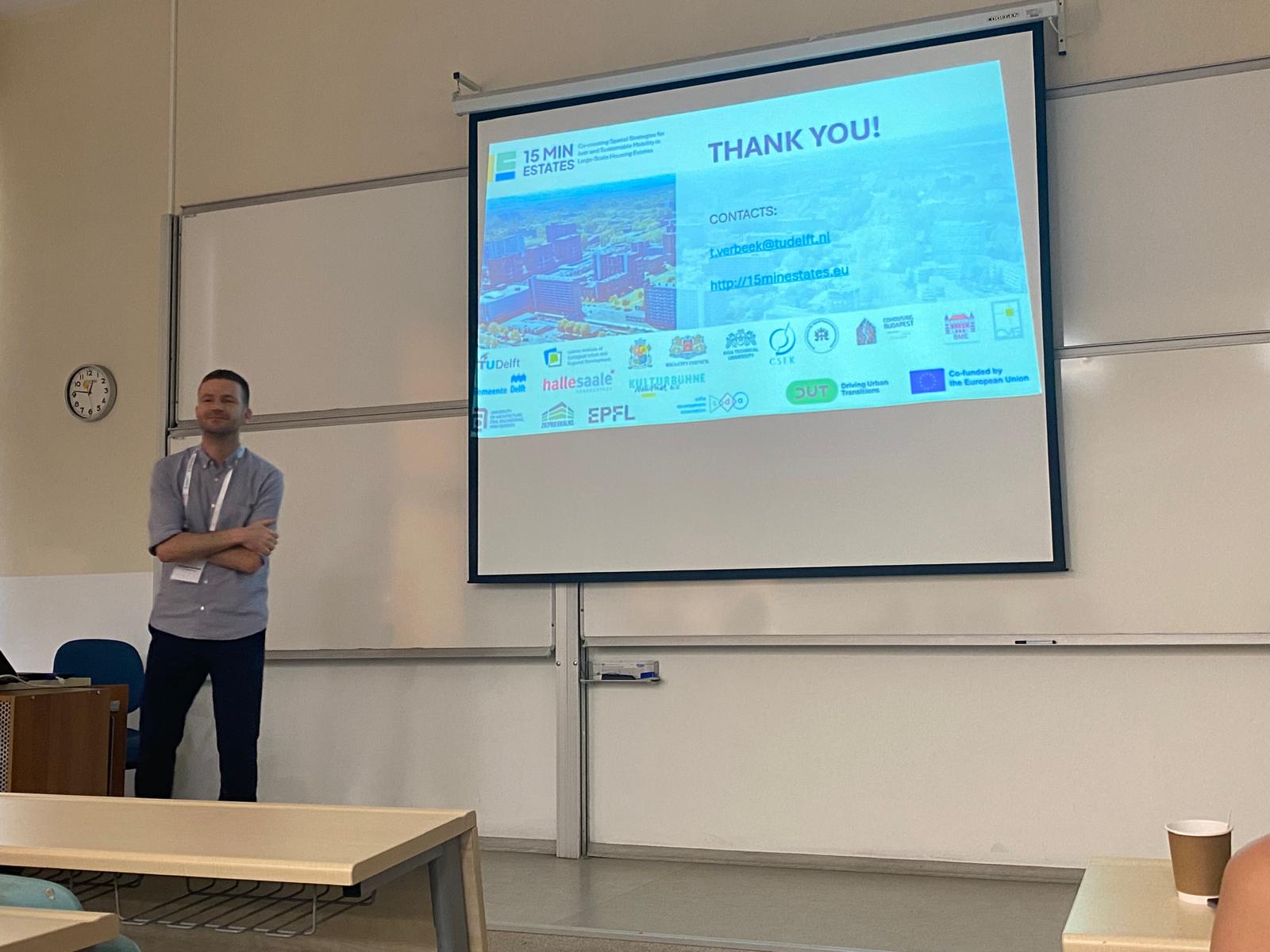
Photo: Uģis Bratuškins
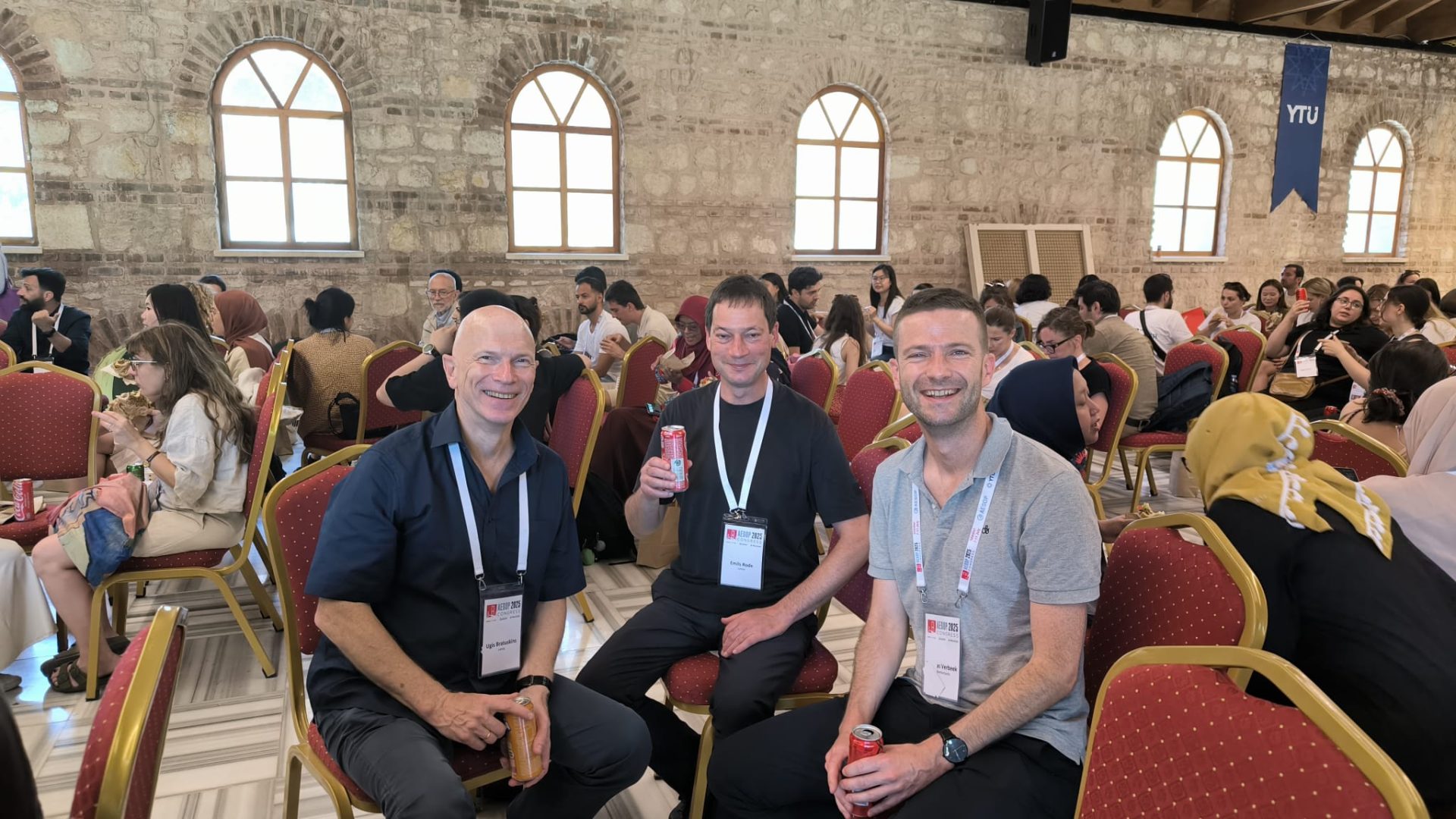
Photo: Alisa Koroļova
15minESTATES meets local community in Ziepniekkalns
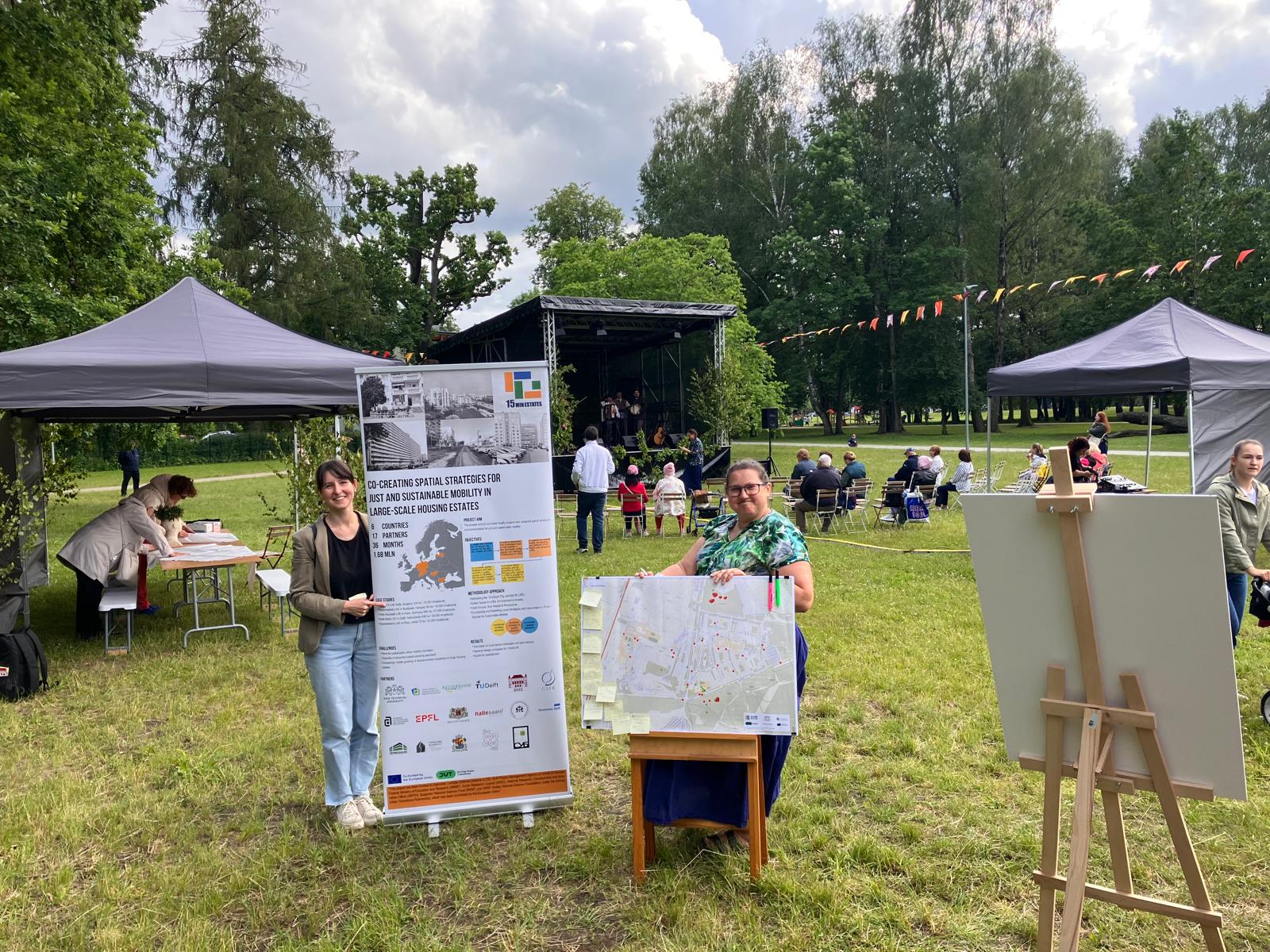
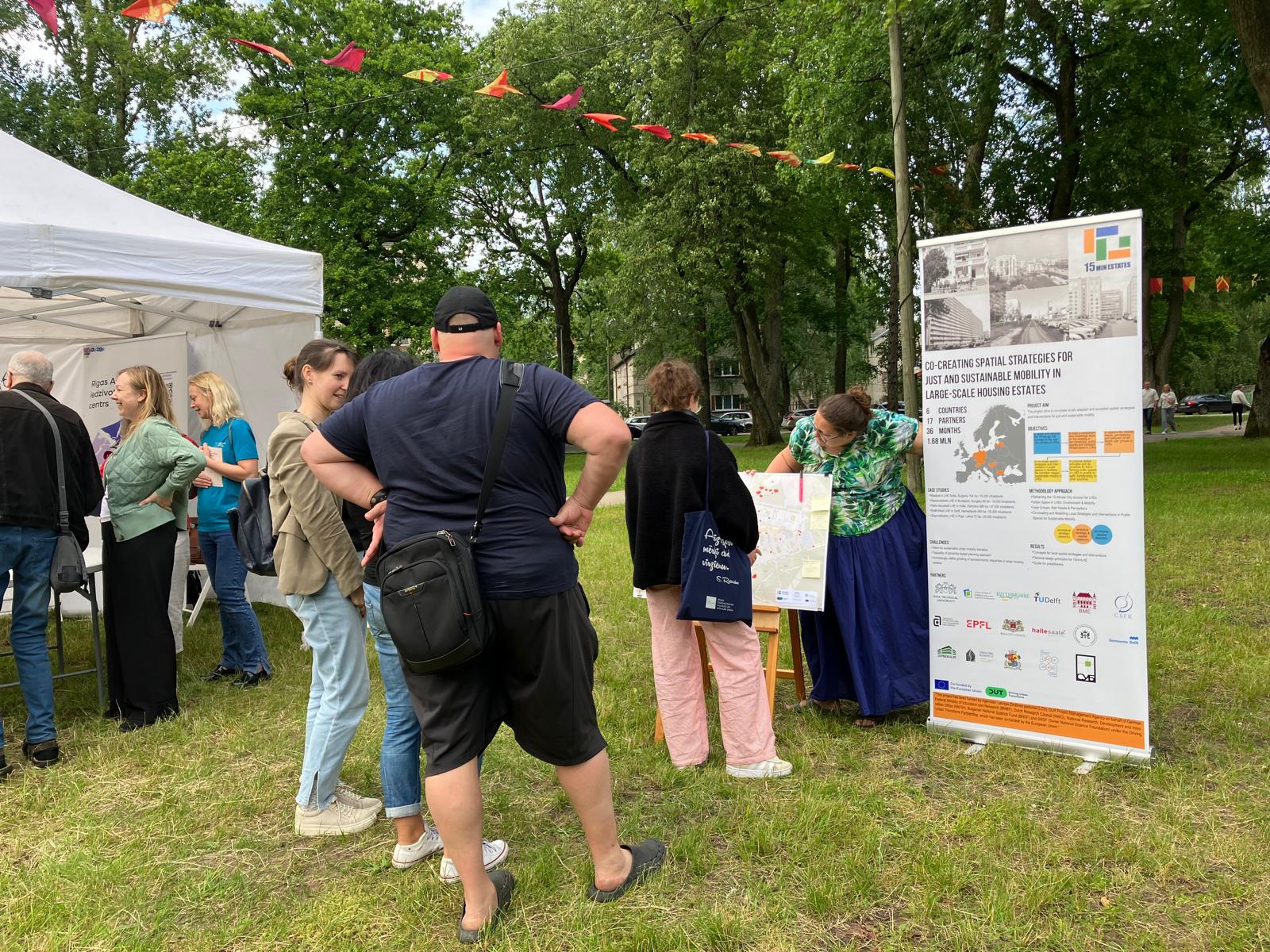
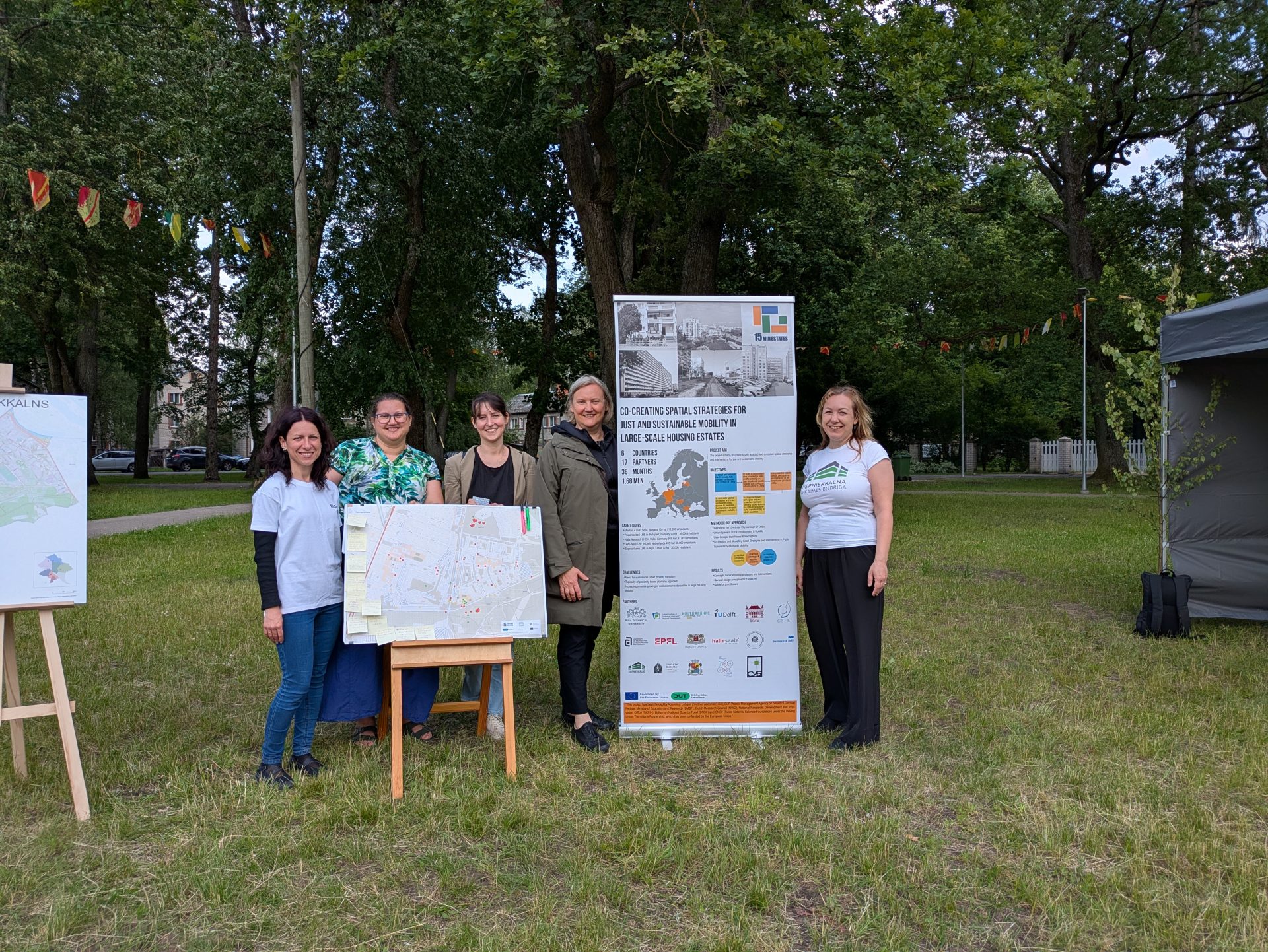
On June 18, 2025 project team from Riga Technical University joined an outdoor event in Ziepniekkalns to share information about project and continue the conversation with local inhabitants about the urban environment in neighbourhood.
Although overall quite satisfied with their neighbourhood, local residents showed growing interest in well-being and improvements of their neighbourhood, and possibilities to participate in actions to be taken towards that.
We believe that with the municipality’s growing attention to neighborhoods and the increasing capacity of neighborhood associations and neighborhood centers, the ability of residents to participate in decision-making on their living environment will soon peak and will create a need for new ways and methods for public involvement.
We want to thank our partners Riga City Council and Ziepniekkalns neighbourhood association for cooperation in this event.
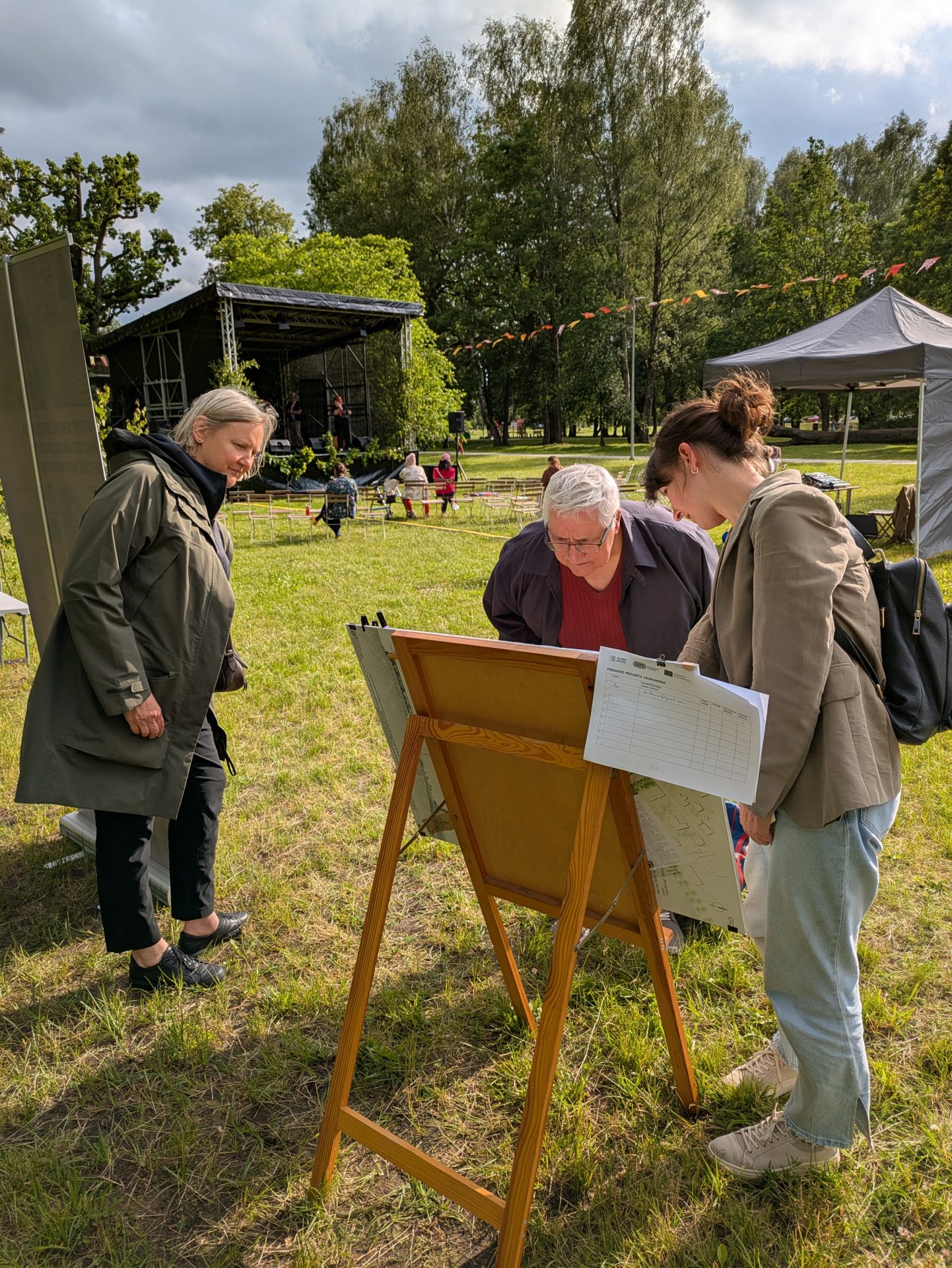
Mapping Mladost 4 together
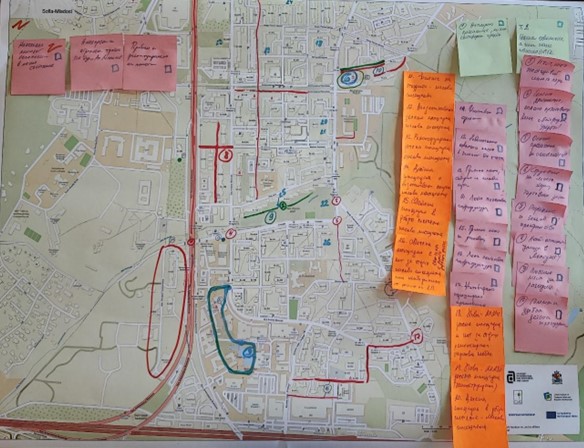
In March 2025, the 15minESTATES project launched its first co-creative workshop series in Mladost 4, Sofia – bringing together residents, students, planners, and city officials to reimagine mobility, accessibility, and everyday life in one of Sofia’s largest housing estates.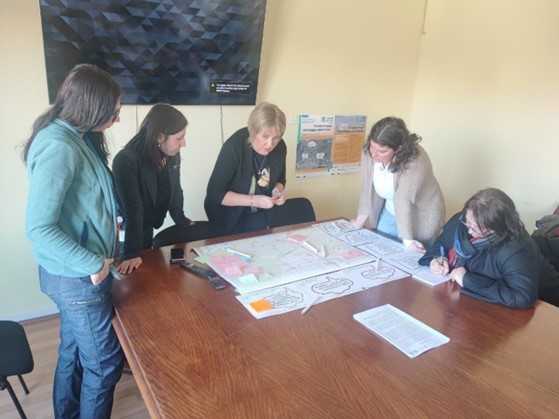
Through interactive neighborhood mapping, discussions, and walking sessions, we uncovered:
- gaps in pedestrian safety, lighting, and sidewalk access,
- public space potentials, green areas, and social gathering spots,
- challenges around car dominance, overdevelopment, and underused infrastructure,
- community-led ideas for safer crossings, better play areas, and stronger neighborhood identity.
Takeaways from Delft-West workshop
Authors: Wilbert den Hoed and Thomas Verbeek, Department of Urbanism TU Delft
In November 2024, TU Delft organised three group meetings in the neighbourhoods of Delft-West involving policymakers and housing corporations, volunteers and professionals who work for and with local residents as well as TU Delft student and research projects.
The discussions had two common goals: to create local support and to set goals for the data collection of the 15minESTATES-project.
For each target group, the discussions focused on collecting information about local challenges around mobility and urban amenities, creating ideas about how this project can best contribute to tackling these challenges, and the role that the involved parties can and want to play herein. Below you will read the most important findings for each meeting.
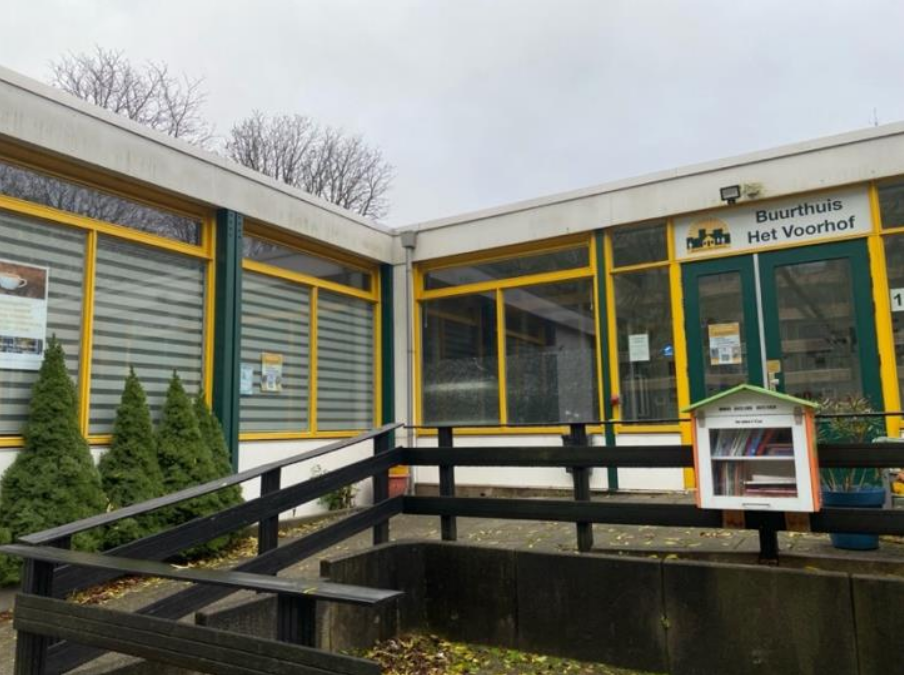
The views of policymakers and housing associations
The attendees see the project as an opportunity to expose the important theme of improving sustainable mobility options. Besides the already planned renewal and physical interventions in Delft-West, such as new housing, the heat network, sewage, and improving safety and quality of life, the challenges in the field of mobility and accessibility sometimes remain underexposed.
To keep the neighbourhood liveable and safe, both policymakers and housing associations are aware that sustainable mobility (walking, cycling, public transport) should be promoted and that car use must be curtailed. To this end, they already take measures such as the construction of routes for cyclists and the stimulation of shared mobility. In addition, they see potential to improve the liveliness of the area, with more activity at plinth level (the ground floor of apartment buildings) and locally rooted amenities. At the same time, choices have to be made: not all places can be lively, some amenities are actually disappearing, and parking regulations make it difficult to limit the space for cars.
What TU Delft researchers know about mobility and inclusivity
The group of researchers and students, all active at the Faculty of Architecture and the Built Environment, talked about a variety of project topics such as creating places where young people feel at home and involving residents and communities in transition processes. Most of the projects took place in Delft-West, which is why we were able to immediately identify bottlenecks and locally applicable lessons such as:
- The feeling of insecurity can be an obstacle to walking as a transport option.
- The renewal of Delft Campus station has had few benefits for the districts of Delft-West.
- For specific groups such as teenage girls or youth, there are currently few or no amenities. Apart from school and home, they have few places to go to within the neighbourhood.
- Students and researchers can and should do more to make their work relevant in the city or neighbourhood and to involve residents in their ideas or solutions.
What neighbourhood actors want to see
The conversation with volunteers and professionals who work in the neighbourhood identified many bottlenecks for the use of public transport and bicycles. They came up with interesting ideas about how the research can be as relevant as possible for the neighbourhoods of Delft-West.
Firstly, infrastructure for pedestrians and cyclists is not always used as intended: designers and planners should take potential users into account better and arrange the space accordingly. Secondly, demographic developments should not be forgotten: large parts of Delft-West are ageing while in some places new buildings are being built and new residents are expected.
Finally, we discussed the wishes of residents, who do not always feel supported by the many changes in the neighbourhood. It must be clear how investments in the neighbourhood help them, that something is done with their ideas. Accessibility by bicycle and on foot is an important need, but so are bus and tram accessibility and new meeting places for social and economic activities.
Willingness and next steps
The momentum for change in Delft-West is high, partly since the WijWest Programme (2023-2043) has gained traction. However, the role of the mobility domain is not always clear in current regeneration plans. Residents also do not always feel heard, and there are doubts whether policy and research will lead to real change. Effective communication also plays a role in this. On the positive side, there is willingness to achieve a more accessible and sustainable living environment. Professional and policy networks have been formed and increasingly involve active local residents and volunteers. For certain target groups, ranging from young to old, the research project can really make a difference, as possible mobility and accessibility improvements are very visible in the neighbourhood. In addition, these topics are very relevant for TU Delft students and researchers, and they are interested in applying their work in the city. We aim to include all these parties in the next steps of the 15minESTATES project:
- Closure of neighbourhood survey in January and analysis of the data
- Starting individual conversations with residents by means of walking interviews
- Analysis of the map assignments during the workshops in November 2024
- Organising a second series of workshops in 2025 to discuss the intermediate results
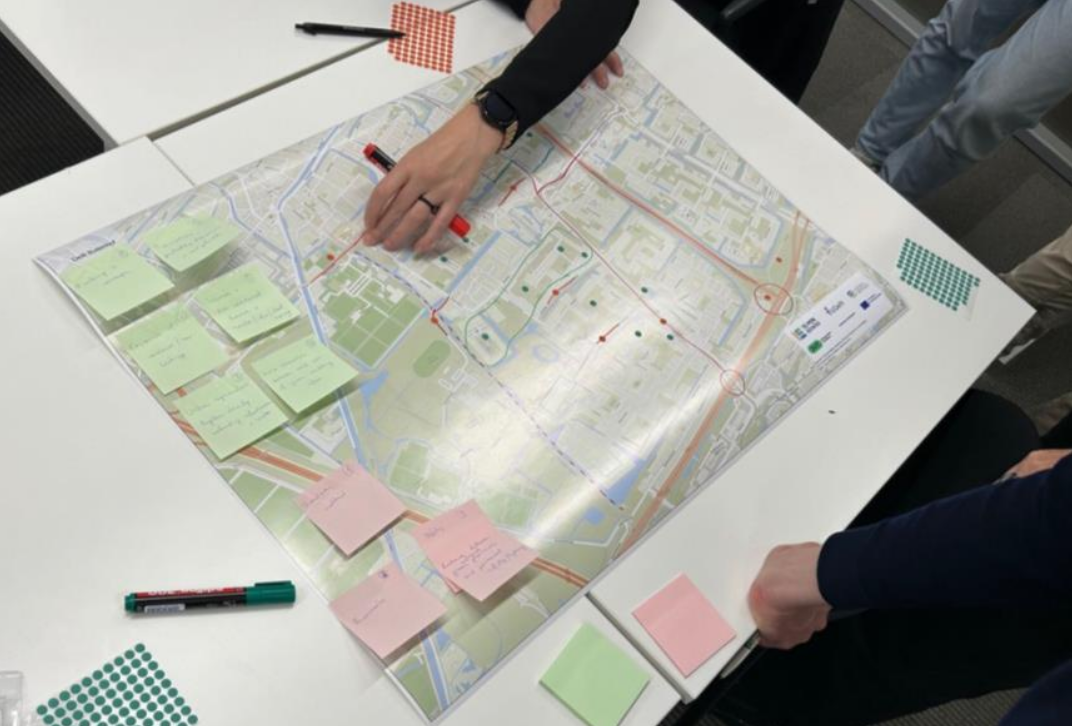
Acknowledgement
We thank all participants in the workshops in Delft-West for their time and their insights. Their involvement is essential to work towards a more sustainable and just neighbourhood.
The first workshop series brings initial conclusions in Riga
On November of 2024, the 15minESTATES project held its first co-creative workshop in Ziepniekkalns, Riga—bringing together school pupils, local residents, municipal planners, and experts to explore how large housing estates can become more livable, sustainable, and connected.
The workshop was organized to initiate co-creation via expanding circle of contacts in the local community, gather information via mapping activity and from local inhabitants on their perceptions of the study area, needs and necessities. And lastly – during two days of workshops information about the project was provided to variety of local stakeholders.
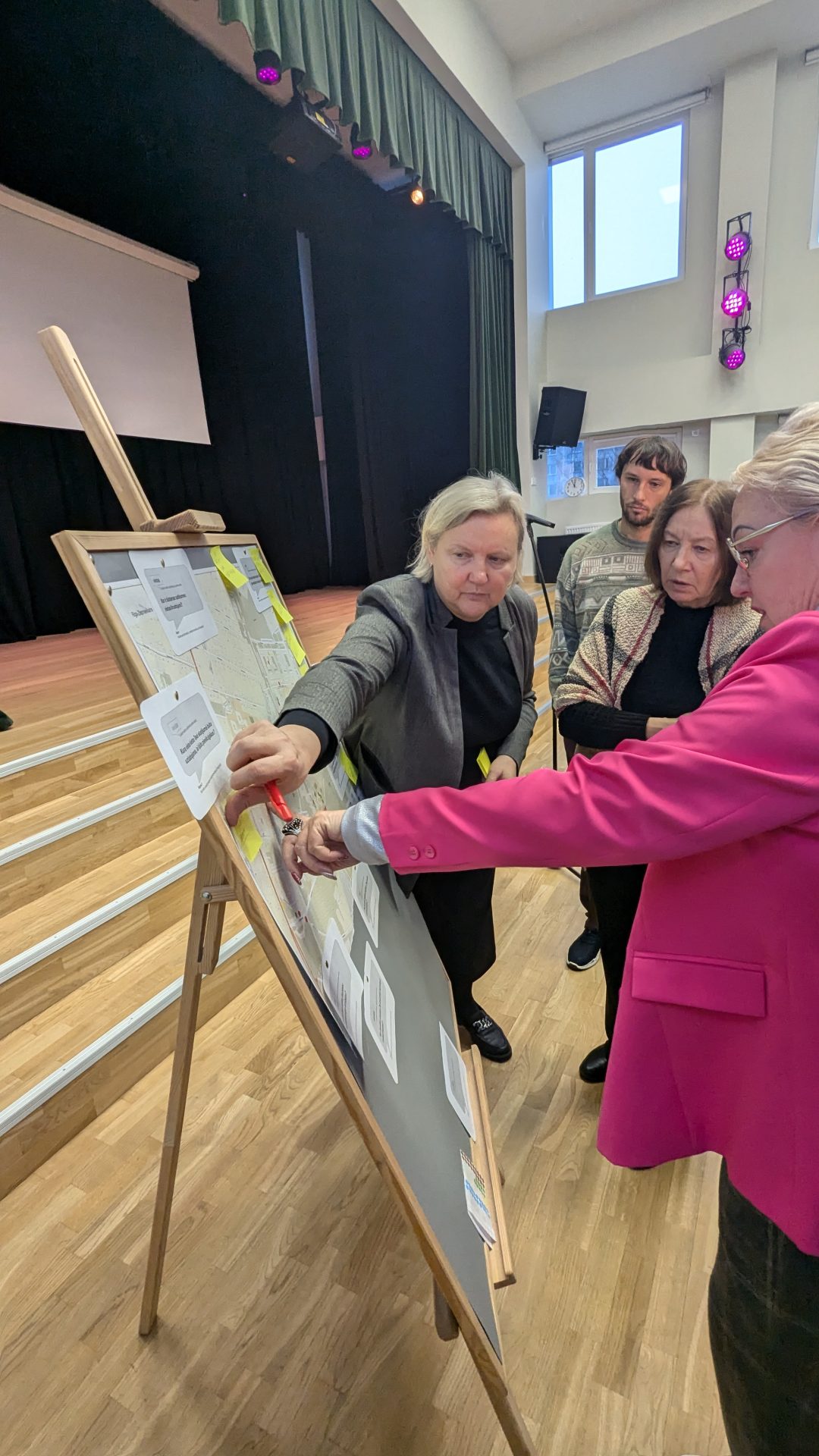
Photo: Ilze Lukstiņa
Through participatory mapping, walk & talk sessions, and roundtables, we identified both the strengths and challenges shaping daily life in the district.
What residents value:
- proximity to shops and everyday services,
- generous green areas and access to nearby nature,
- affordable and to city center well connected neighbourhood.
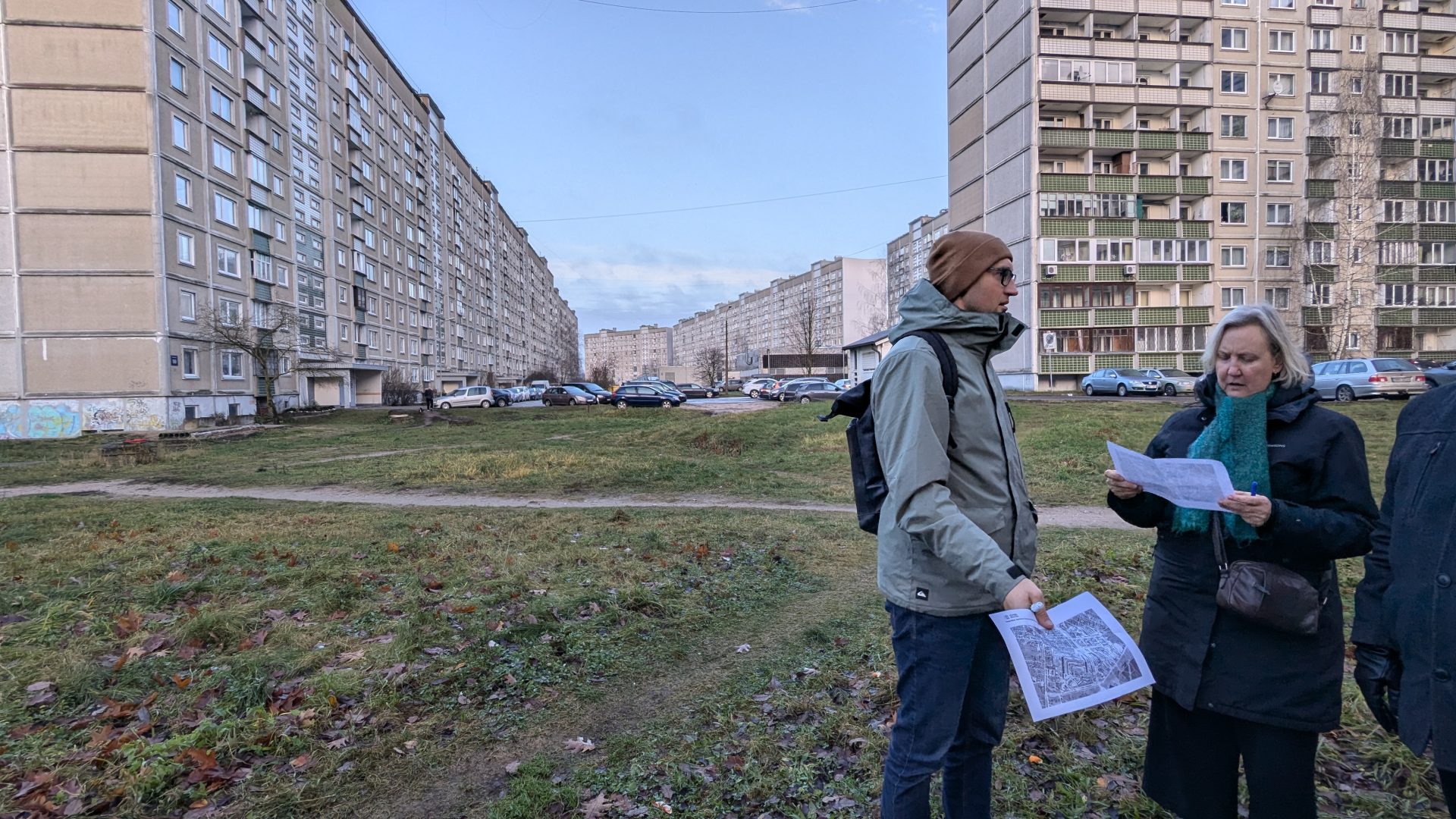
Photo: Ilze Lukstiņa
Key issues raised:
- poor pedestrian and cycling infrastructure, including unsafe crossings and inaccessible sidewalks,
- lack of indoor recreational and cultural spaces, especially for youth and elderly people,
- high car dependency despite a desire for more eco-friendly mobility,
- complex land ownership limiting public investments in green and shared spaces,
- concern about the impact of a new highway on access to the forest and walkability.
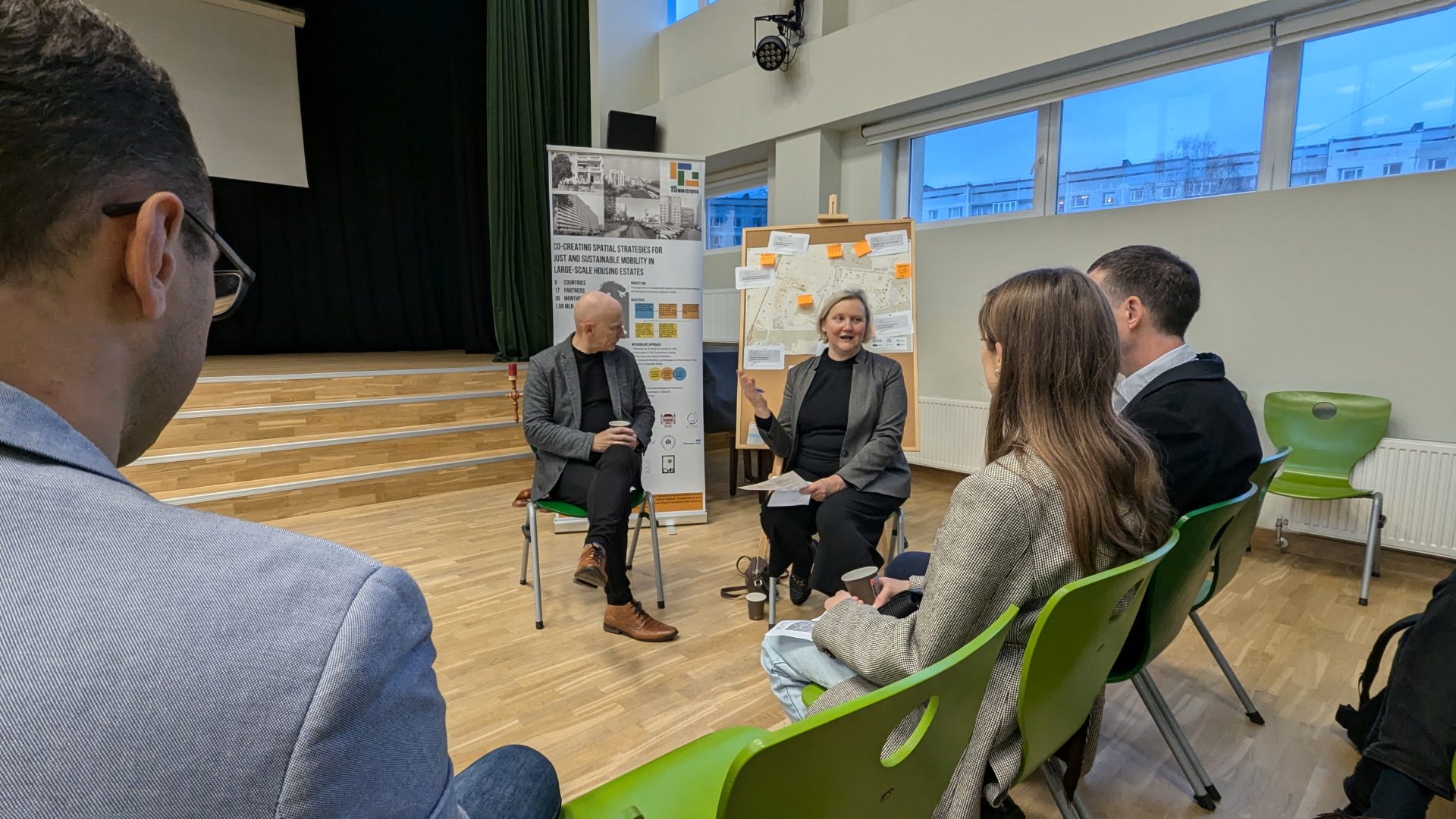
Photo: Ilze Lukstiņa
Halle workshop series No. 1
Author: C. Zöllter and S. Rößler, Leibniz Institute of Ecological Urban and Regional Development
The first workshops series were carried out in three days from October 28. to 30., 2024 in Halle-Neustadt.
The objective of these activities was:
- to kick-off the co-creative process,
- to inform local stakeholders (city administration, local initiatives) about the project,
- to gather knowledge on topic-related challenges, ongoing activities, needs and interests,
- to explore opportunities for the participation of residents in co-creative knowledge production (neighbourhood maps, digital mapping, knowledge exchange).
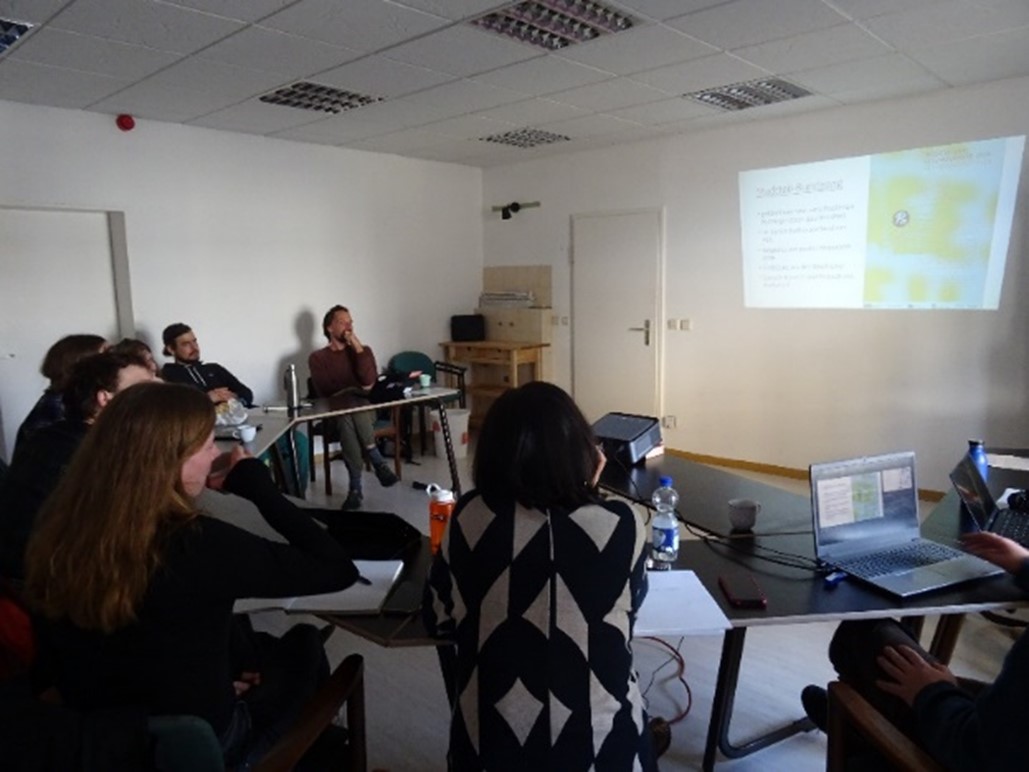
Photo: C. Zöllter
During these intensive days, workshops with representatives of different municipal departments and local initiatives took place. In different participatory activities, we presented and tested digital mapping tools, talked about the local situation using neighbourhood maps and learned about daily ways from the perspective of pupils.
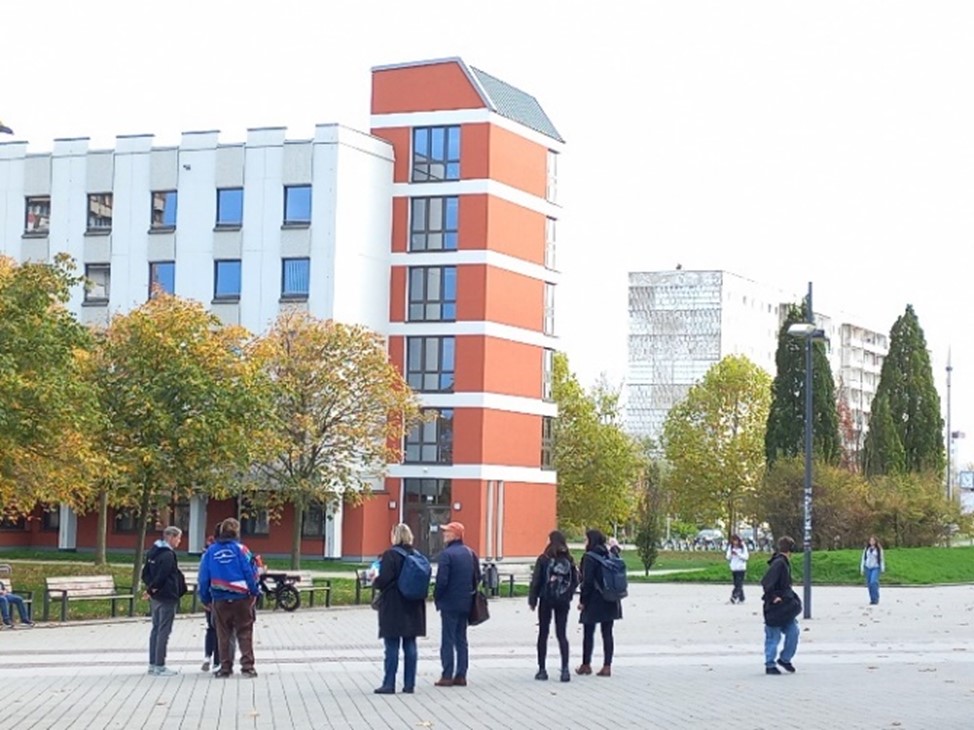
Photo: C. Zöllter
Finally, we could present the 15minESTATES project at the SILBERSALZ Science & Media Festival as part of the soft opening event of the Smart City Education Centre in our partners place “Passage 13”.
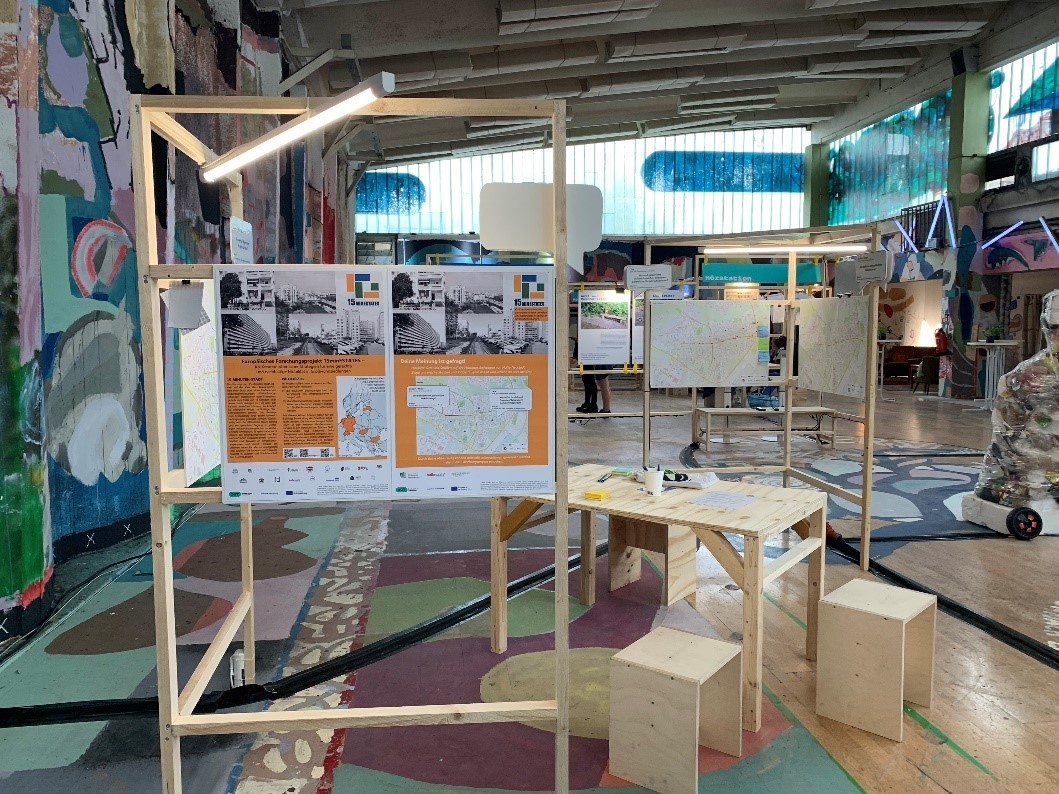
Photo: S. Rößler
15minESTATES launched in Halle (Saale) with neighborhood event
Where is your favourite place to go for a walk or to meet friends? Which routes and places do you avoid?
With these and other questions, the 15minESTATES project („Co-creating Spatial Strategies for Just and Sustainable Mobility in Large-Scale Housing Estates“) started its field phase. Over the next three years, the project team aims to investigate what requirements and strategies are needed to implement the 15-minute city concept in large housing estates.
As part of a neighborhood event in Halle-Neustadt, there was a district walk where residents shared their views of the area. The walk was also used to conduct initial experiments to collect geodata using OpenStreetMap tools. At the joint picnic afterwards, the participants marked their favourite places on a map and also explained where there is still room for improvement in Halle-Neustadt. Using the so-called ‘flower of proximity’, participants were able to visualise which supply facilities or services they would like to have in their immediate residential environment and for which a greater distance would be acceptable.
The City of Halle (Saale) with its large housing estate Neustadt is the German case study in the 15minESTATES project; which is part of #DUTPartnership. It is also analysing large housing estates in Latvia, Bulgaria, Hungary and the Netherlands. Halle-Neustadt serves as a pilot area. Different formats for the organisation and implementation of co-creative approaches and participation formats are used here. The experience gained by the project team will be used to support the partners in the other case study areas.
15minESTATES presented in AESOP congress
On July the 15minESTATES project leader professor Sandra Treija (Riga Technical University, Latvia) and researcher professor Thomas Verbeek (Delft University of Technology, Netherlands) was visiting Paris to present the project to the participants of the AESOP congress and give presentation Understanding Mobility Behaviour in Large Housing Estates: A Critical Application of the 15-minute City Concept.
The presentation outlined present challenges of large scale estates and introduced the goals and objectives of the project.


15minESTATES partners co-working in Riga
On June 17 and 18, 2024, the participants of the project 15minESTATES gathered at the Institute of Architecture and Design of the Riga Technical University (RTU) to evaluate the work done in the first six months of the project and solve the identified challenges.
Project partners created a lively discussion about the theoretical settings of the 15-minute adaptation of the concept to the specifics of oversized residential areas.
15minESTATES presented in seminar dedicated to mobility
To present the current projects and research in the development of the urban environment, Riga Technical University (RTU) organized Research Platforms seminar.
The focus of this seminar was mobility and micromobility issues. The transport and mobility sector has always played an important role in the urban environment. Currently, the Green Course determined by the European Commission and the development concepts of modern cities foresee new changes in mobility. Green and smart technologies are increasingly dominating – starting with various drive technologies, fuels, up to IoT and artificial intelligence. The participants of the research platform seminar tried to find an answer to what the city of the future will be.
Our lead researcher Sandra Treija took part in this seminar with a presentation on 15minESTATES project – objectives and goals of the project and the use of its results in the modeling of the future urban environment.